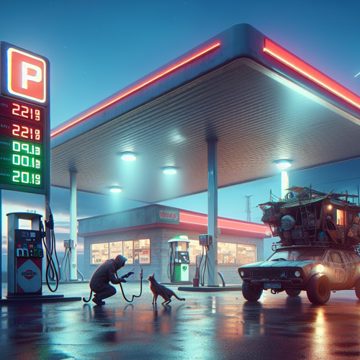
Why are gas prices so high is more than a headline question. Higher fuel costs are squeezing ride-share drivers, nudging some people toward EVs, changing household budgets, and even affecting delivery work and vehicle choices.
personal financegas priceswhy are gas prices so highride-sharingEVsdelivery workdriversfuel costs

Why are gas prices so high is becoming a practical question for more than drivers filling up once a week. It is changing how people work, how they budget, and how they decide whether a car is worth owning at all. For some, expensive fuel is a nuisance. For others, it is a direct hit to income, mobility, and monthly expenses.
One of the clearest effects is showing up in ride-sharing. Drivers describe a tighter math problem than before: when fuel rises and pay falls, short trips start to look unprofitable. A ride that once seemed acceptable can turn into a loss after factoring in miles to the pickup, time spent idling in traffic, and the drive back to a busier area. Some drivers say they are now avoiding low-value trips, especially late at night or around stadium events when traffic makes the real cost of a ride much higher than the app suggests.
That shift matters because passengers feel it immediately. Longer wait times, more canceled requests, and less availability in busy areas are exactly what happens when drivers decide the payout no longer covers the expense. The problem is not just the pump price itself. It is the combination of expensive fuel, vehicle wear, insurance, maintenance, and platform pay that leaves drivers with less reason to stay on the road. When gas prices go up by a large margin, the margin on each trip shrinks fast.
Some drivers say the change has pushed them to multi-app less, cherry-pick more, or leave the work entirely. A few have moved toward shopping and delivery jobs because those can mean fewer miles driven for a better return. Others simply wait for better offers. The result is a more fragile system: when fuel costs rise, the supply of willing drivers can tighten even if there are still plenty of cars on the road.
At the same time, high fuel prices are reinforcing the appeal of electric vehicles. For EV owners, the question of why are gas prices so high can feel almost irrelevant. Their daily commute is insulated from the swings at the pump, and that stability is part of the point of buying electric in the first place. Some owners say they barely think about gas stations anymore and only notice fuel prices when they are in the news. For them, the rising cost of gasoline is less a financial shock than a reminder of why they switched.
That sense of immunity is not just about savings on each fill-up. It also changes habits. People with EVs often do not plan around station locations, price boards, or fuel promotions. They charge at home, at work, or at public chargers, and gasoline becomes a background concern rather than a recurring expense. In a period when many households are watching every dollar, that insulation can feel like a major financial advantage.
The pressure is also showing up in personal finance. When gas prices rise, they do not affect only people who commute long distances. They ripple through monthly budgets in subtle ways. A family that spends more on fuel may spend less on dining out, travel, entertainment, or savings. A worker with a long commute may feel the increase as a direct reduction in take-home pay, even if their salary has not changed. For people already trying to manage debt, rent, groceries, and insurance, fuel can become one more volatile bill to absorb.
That is why the search for why are gas prices so high is often really a search for how to cope. Some households respond by trimming unnecessary driving, combining errands, or choosing cheaper vehicles. Others look at the total cost of ownership and wonder whether a more efficient car, a hybrid, or an EV would make more sense over time. In that calculation, the fuel pump is only one part of the story, but it is the part people see every week.
The cost pressure is not limited to commuters and app-based drivers. Delivery work is affected too. When every mile matters, rising fuel costs can turn a low-margin route into a poor bet. That is especially important for workers who rely on their own vehicles and cover fuel, maintenance, and depreciation themselves. Higher gas prices can make a delivery run look profitable on paper while leaving very little after expenses.
In some places, fuel costs hit even harder because transportation work is tied to basic economic survival. Drivers of public transport and smaller commercial vehicles may not have the option to simply stop driving when prices rise. They have to keep working, even when the cost of fuel eats into already thin earnings. In those cases, the question is not whether gas prices are annoying. It is whether the fare, route, or delivery fee still covers the trip.
The broader economy feeds into all of this. When fuel prices rise quickly, they can intensify inflation in other areas by making shipping, commuting, and service work more expensive. That is why a jump at the pump often feels bigger than the number itself. It touches labor, logistics, and household budgets at the same time. A gallon of gasoline is not just a commodity; it is part of the cost structure for everyday life.
That is also why the conversation around gas prices often splits into two realities. One group is trying to survive the extra cost with tighter planning and fewer miles. Another has already stepped away from gasoline altogether and now sees the price swings from a distance. Between those two worlds are millions of people trying to decide whether to keep driving the same way, change vehicles, or change jobs.
So when people ask why are gas prices so high, the answer is not just about the price of crude or a single market event. It is about how a higher fuel bill travels through the economy and lands on ordinary decisions: whether a driver accepts a ride, whether a commuter keeps a long route, whether a household buys an EV, and whether the monthly budget still works.
In that sense, expensive gas is doing more than raising costs. It is changing behavior. It is reshaping work. And for many people, it is making the price of staying mobile feel harder to ignore than ever.