Gas stations are turning up in stories that range from a roadside cat rescue to bizarre vehicle sightings and fresh frustration over fuel costs. The common thread is how ordinary stops now capture both the rough edges of the economy and unexpected human moments.
economygas pricesanimal rescuefuel costsgas stationsroadside stories

Gas stations have become more than quick stops for fuel. They are places where people run into small surprises, expensive realities, and sometimes moments that change a life. A simple pull-off for gas can turn into a rescue, a roadside spectacle, or another reminder of how much it costs to keep moving.
One recent encounter began in the most ordinary way: a family driving home from a funeral stopped at a gas station and let their dog outside. Near the station, a skinny cat emerged from the woods and ran straight toward them, crying out as if it had been waiting for help. The cat was in rough shape, with damaged fur, signs of possible sunburn or frostbite on the ears, and ticks covering its body. The family did not leave her behind. They took her home, planned a vet visit right away, and gave her a name: Milo.
That kind of rescue story fits a pattern that many people recognize immediately. Gas stations sit at the edge of highways, towns, and empty stretches of road, which makes them a natural meeting point for lost animals, stranded travelers, and people who are simply in the right place at the right time. In this case, the cat seemed to choose her own path to safety. The encounter was brief, but it was enough to change the animal's future. What might have been another hard night became the start of care, warmth, and a better chance at survival.
Not every gas station story is tender. Some are memorable because they are strange enough to stop people in their tracks. One vehicle spotted at a station looked homemade, towering so high that it seemed barely believable. The design drew attention because it appeared top-heavy, awkward, and maybe not entirely roadworthy. It looked like the sort of machine that could make every turn feel like a stunt. People who saw it compared it to a doubled-up camper, a stretched roofline, and a project that answered a practical question in the most improvised way possible: if you need more space, why not build upward?
Those odd roadside sights are part of the gas station landscape too. A station is one of the few places where a wildly modified vehicle, a family SUV, a work truck, and a long-haul rig can all end up in the same frame. The result is a kind of accidental public showroom for whatever people are driving, hauling, or patching together. Some of those vehicles look clever. Some look unsafe. Some look like they should not have made it out of the driveway. But all of them pass through the same place where everyone has to stop, pump, and look around.
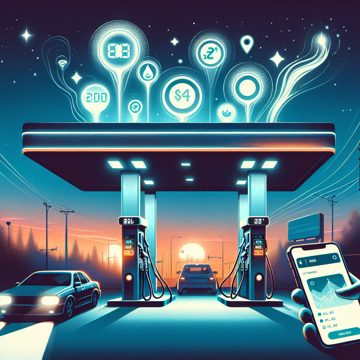
Still, the biggest gas station story for many people right now is the price at the pump. Fuel costs have become a daily talking point because they hit in such a direct way. There is no delay, no bill arriving later, no easy way to ignore the total as it climbs. Drivers have noticed regular gas moving from the low twos into the threes and beyond, with some saying they had never before paid more than $60 for a fill-up and now feel the pressure every time they stop.
That shift changes behavior. Some people say they used to drive around for fun and now think twice before taking an unnecessary trip. Others mention needing premium fuel and feeling the difference even more sharply. A jump from about $2.00 a gallon to well over $3.00 in a short period can make ordinary errands feel heavier. The car still needs fuel, but the decision to drive becomes less casual and more calculated.
There is also a strong sense that gas prices have become a symbol for the broader economy. People do not just see the cost of gasoline; they see what it says about wages, inflation, household budgets, and the feeling of being squeezed. A station sign can trigger arguments about policy, blame, and who should be held responsible for higher costs. Some drivers shrug and accept that prices move with the market. Others see every increase as proof that the system is working against them. Either way, the pump remains one of the most visible places where economic pressure becomes personal.
That is part of why gas stations keep showing up in stories that mix humor, frustration, and compassion. They are practical places, but they are also exposed to everything that passes by. A station can be where someone rescues a neglected animal, where a bizarre vehicle becomes a local legend for a day, or where a driver stares at the total and recalculates the week ahead. In a single stop, the ordinary and the unexpected sit side by side.
The cat rescue is the most human of these stories because it turns a routine pause into an act of care. The strange vehicle is the most visual because it turns a parking lot into a curiosity. The fuel-price anxiety is the most universal because it affects nearly everyone who drives. Together, they show why gas stations remain such a rich setting for small dramas. They are not just places to buy fuel. They are places where the road, the economy, and chance all meet.
And that may be the real reason gas stations keep drawing attention. They are familiar enough to fade into the background, but exposed enough to reveal what is happening outside of them. When prices rise, when a lost animal appears, or when an impossible-looking vehicle rolls in, the station becomes a snapshot of the moment. It reflects how people live now: watching costs, making do, helping where they can, and sometimes being surprised by what arrives at the edge of the lot.