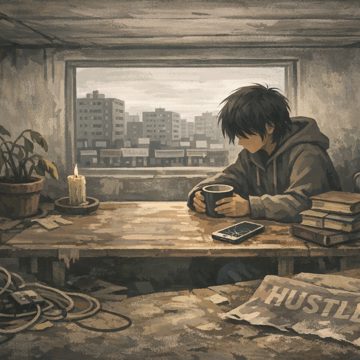
Mall retailer store closures are reshaping how people use shopping centers, from empty anchor spaces and abandoned supermarkets to sudden crowds when a rare item appears. The contrast between quiet vacancies and chaotic sellouts shows how malls are becoming less predictable and more fragmented.
mall retailer store closuresmall closuresretail vacanciesshopping mallspecialty storesstore closures

Mall retailer store closures are changing the feel of shopping centers in ways that go beyond empty storefronts. The same malls that once relied on steady foot traffic now swing between near silence and sudden bursts of chaos, depending on whether a store is open, a product is rare, or a closure has left a corridor dark and unused. For many shoppers, the experience now feels split between nostalgia for the old mall and the more awkward, uneven reality of what remains.
One side of that reality is the vacancy itself. Longtime chains that once anchored malls or nearby retail strips have disappeared, leaving behind gaps that are hard to fill. Shoppers still remember stores that shaped their routines: toy stores, electronics chains, bookstores, discount outlets, shoe stores, and department stores that acted as social landmarks as much as commercial ones. Their absence is not just a matter of lost convenience. It changes how people move through a mall, where they linger, and whether the trip feels like a destination or a detour.
The effect is especially visible when a mall still has a few remaining draws. A specialty store can become the one place that pulls a crowd, while the rest of the property feels increasingly ghostlike. In one recent example, a limited-release watch sparked such a surge that police had to evacuate part of a shopping mall after a corridor filled with hundreds of people. Some had camped outside overnight, treating the launch like an event rather than a simple purchase. The store later stayed closed for safety reasons in another location, and a third location saw tensions rise when the product did not appear at all.
That kind of scene captures a strange contradiction in retail today. Malls can look hollow on an ordinary afternoon, but a single item can still trigger the kind of frenzy once associated with major product launches or holiday sales. The motivation is often not even personal use. Some buyers openly see these releases as resale opportunities, hoping to turn a modest purchase into a much larger profit. That creates a market atmosphere inside a place that otherwise feels like it is shrinking.
The awkwardness of malls also comes through in smaller, more ordinary moments. People still visit specialty stores with genuine enthusiasm, whether it is a hobby shop, a model kit retailer, or a niche brand outlet in an outlet mall. Those visits can feel almost restorative. One shopper described walking into a Gundam store and seeing completed kits displayed together, calling it an unexpectedly satisfying experience because there were no lines and no rush. In a retail environment marked by closures and uncertainty, a well-run specialty shop can feel almost like proof that mall culture has not vanished entirely.
At the same time, the mall can still produce the opposite feeling: social discomfort, crowd pressure, and the sense that everyone is in everyone else's way. A busy sales event can make a familiar place feel hostile. Shoppers line up overnight, wait in bad weather, or cluster around a storefront for hours. When the store finally opens or fails to open, the mood can shift quickly from anticipation to frustration. That tension is part of what makes today's mall experience so uneven. The venue is still public, still familiar, but it no longer guarantees comfort or order.
There is also a deeper emotional layer to all of this. The decline of mall retailers is not only about economics. It is tied to memory. People recall stores where they bought school clothes, browsed records, picked up electronics, or wandered with family on weekends. Some remember lunch counters, discount counters, seasonal displays, and the feeling that a mall was a self-contained world. When those stores close, the mall does not just lose tenants. It loses the shared reference points that made it feel alive.
That is why so many people describe closed malls and shuttered chains in ghostly terms. An empty anchor space can feel like a hollow version of a once-familiar place, a kind of alternate reality where the shape of the old mall remains but the purpose has gone missing. A supermarket shell, a darkened department store, or a vacant wing can feel less like a temporary gap than a permanent reminder that the retail map has been redrawn. Even when new tenants arrive, they often do not restore the same social function.
The closures also expose how uneven mall redevelopment can be. Some properties are being reworked with construction, new uses, or partial reinvention. Others sit in limbo, with one section active and another abandoned. That in-between state can make a mall feel both current and obsolete at once. A shopper may walk past a construction zone, a closed storefront, and a busy specialty retailer in the same visit. The result is a place that no longer has one clear identity.
Retail freebie stories and impulse buys add another layer to the picture. Even as more stores disappear, the lure of a deal, a limited release, or a gift with purchase still draws people in. That can make the mall feel almost theatrical: one store is empty, another is packed, and a third is being treated like a treasure hunt. The contrast is sharp. Retail is no longer a stable background to daily life. It is a sequence of peaks and absences.
For shoppers, that means the mall now requires a different kind of expectation. You may go hoping for a familiar routine and instead find a closed storefront, a crowd, or a store that is only open part of the week. You may also stumble into a place that still feels vibrant, where a niche retailer or hobby shop gives the mall a pulse. The experience can be frustrating, nostalgic, and oddly exciting all at once.
Mall retailer store closures are not just a business story. They are a story about how public spaces age, how consumer habits change, and how people adapt when the places they used to take for granted stop behaving the way they once did. The mall is still there, but it is no longer the same kind of place. It is quieter in some corners, louder in others, and increasingly defined by the gap between what it used to be and what it has become.