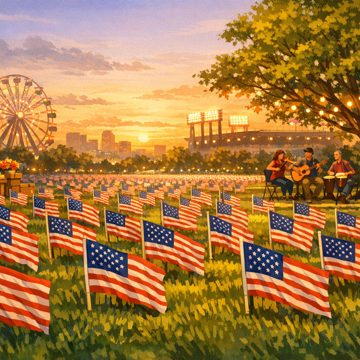
People are thinking about the American flag as both a symbol of pride and a prompt for reflection. For some, it still means service and sacrifice. For others, it now carries questions about belonging, duty, and what patriotism should look like in daily life.
american flagpatriotismreflectionnational identityunitycivic values

The American flag still stands for pride, memory, and national identity, but for many people it now carries a more complicated emotional weight. It can mean service, sacrifice, and shared history. It can also stir up questions about who feels included, what the country owes its people, and whether patriotism should be measured by symbols alone or by how people are treated in ordinary life.
That tension is part of why the American flag continues to resonate so strongly. Some see it as a straightforward expression of loyalty and gratitude. Others look at it and think about the gap between the ideals it represents and the reality of everyday life. The flag can still inspire, but it can also invite reflection: on freedom, on responsibility, and on whether national pride should make room for honest self-examination.
One reason the symbol remains powerful is that it is so visible in daily life. It appears at schools, public buildings, sporting events, memorials, and holiday celebrations. Because it is everywhere, it becomes a kind of mirror. People project their own experiences onto it. For some, it recalls family members who served, neighbors who built communities, or moments of national unity. For others, it brings up frustration, disappointment, or the sense that patriotism is often used as a slogan rather than a practice.
That split does not necessarily mean the flag has lost meaning. In some ways, it means the opposite. Symbols that matter tend to absorb conflict, memory, and change. The American flag remains a national emblem precisely because people keep asking what it should represent now. Is it about reverence for the past, hope for the future, or accountability in the present? The answer for many is all three at once.
The reflection around the flag also reflects a broader shift in how people talk about patriotism. A generation ago, public displays of national feeling were often treated as uncomplicated. Today, many people want a version of patriotism that is less performative and more grounded in values: fairness, service, decency, and a willingness to improve the country rather than simply praise it. In that view, loving the flag means wanting the nation to live up to its promises.
That is why the American flag can feel both unifying and unsettling. It can bring people together around shared rituals and a common identity, but it can also prompt hard questions about whose stories are honored and whose are ignored. The same banner that flies at moments of celebration also appears at times of grief, protest, and remembrance. Its meaning shifts with context, which is part of what keeps it relevant.
The emotional range attached to the flag is not new, but it may be more visible now. People are more likely to separate respect for the symbol from agreement with the country s institutions or policies. That distinction allows for a more nuanced kind of patriotism, one that does not demand blind approval. It makes room for admiration and criticism to coexist. For many, that is not a contradiction. It is the point.
There is also a deeply personal side to this reflection. The American flag can remind people of home, of family traditions, of military service, of school ceremonies, or of moments when the country felt larger than individual differences. It can also remind them of exclusion, conflict, or promises that were not kept. Because those memories are so different, the same symbol can produce very different reactions depending on the person and the moment.
What remains consistent is the flag's ability to focus attention. It asks people to decide what patriotism means to them. Is it ceremonial, emotional, civic, or moral? Is it about pride in a shared identity, or about responsibility to improve the country? For many, the strongest answer is not one or the other, but a combination. The flag can represent gratitude for what has been built and concern for what still needs to change.
That is why reflection is becoming such a central part of how people talk about the American flag. The symbol has not become less important. If anything, it has become more layered. It still carries respect, but it also carries expectation. It still marks unity, but it also invites scrutiny. And in that tension, many people find a more honest patriotism - one that does not stop at display, but asks what the country should be, and who gets to help define it.