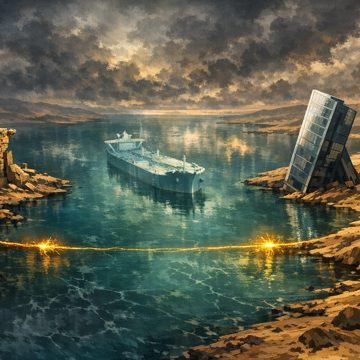
The Strait of Hormuz has become the center of a fast-moving oil crisis, pushing gasoline higher, tightening jet fuel supplies, and raising fears that a prolonged blockade could reshape global energy flows and force harsher rationing.
iranStrait of Hormuzgas priceshormuzoil crisisjet fuelblockadeglobal energy

The Strait of Hormuz is now the critical choke point in the oil crisis, and its closure is rippling far beyond the Gulf. What began as a military and diplomatic standoff has turned into a market shock that is showing up in gasoline prices, jet fuel shortages, and growing pressure on global supply chains. The core issue is simple: a narrow waterway that normally carries a huge share of the world's crude and liquefied natural gas has become severely constrained, and every day that restriction lasts adds more stress to the system.
Drivers are already feeling it at the pump. Gasoline prices have jumped sharply, with some estimates showing a roughly 50% increase from levels before the war widened. The immediate reason is not just panic buying or speculation. It is the physical shortage created when crude cannot move through the strait at normal volumes. When a route that normally handles about a fifth of global oil flows is disrupted, refiners, shippers, and retailers all begin to compete for fewer barrels. That competition moves quickly from futures markets into household budgets.
The market reaction has been uneven because many people still expect a quick fix. That expectation has repeatedly delayed a full repricing of risk. Each time crude approaches the kind of level that would normally trigger broad alarm, governments and producers try to cushion the blow with reserves, hedging, or emergency messaging. But those measures can only soften the impact for so long. They do not restore the missing supply. The underlying math is what matters, and the math points to a prolonged squeeze if the Strait of Hormuz remains shut or only partially open.
The strategic problem is bigger than oil prices alone. Iran appears to see leverage over the strait as one of the few tools powerful enough to shape the outcome of the conflict. From its perspective, giving up that leverage without receiving durable security guarantees would leave it exposed. That is why any attempt to separate the energy crisis from the military confrontation is likely to fail. The blockade is not just an economic event. It is part of a bargaining strategy designed to force concessions.
At the same time, the leverage is not sustainable forever. If Iran tried to turn the strait into a long-term toll gate or restriction point, it would effectively gain influence over the energy exports of several Gulf states, including major producers whose shipments depend on that route. Even with some bypass pipelines, the region would still be vulnerable to persistent disruption. No Gulf state is likely to accept a permanent arrangement that places so much of its export capacity under Iranian control. That means a lasting blockade would almost certainly invite continued conflict rather than a stable new order.
That is why the crisis is so dangerous for markets. It is not a normal supply shock that can be solved by waiting for a few cargoes to reroute. It is a geopolitical standoff with no clean off-ramp. If Iran keeps the pressure on the strait, oil and fuel prices can keep climbing. If it backs away from that leverage, it may push harder for other forms of deterrence, including a more advanced nuclear posture. Either path carries serious risk for the region and for global energy markets.
The effects are already reaching Europe. Jet fuel inventories are moving toward levels that could trigger rationing or flight cancellations if the shortage continues. Analysts are watching a critical threshold measured in days of supply, not months. Once inventories fall below that line, the problem stops being abstract. Airlines have less room to absorb delays, and smaller airports are more vulnerable to disruption. Even if refineries shift output toward jet fuel, that only buys time. It does not solve the shortage created by the blocked trade route.
Travel planning is starting to reflect that reality. Airlines and airports can manage a temporary shock, but a prolonged shortage changes schedules, costs, and route decisions. Business travel becomes more expensive. Holiday plans become less reliable. Freight costs rise along with passenger fares. In a market already under strain, a fuel squeeze can cascade into broader inflation, hitting goods and services that depend on transport.
The broader oil market has been slow to fully absorb this. Some traders still treat the disruption as temporary, expecting diplomacy to reopen the route or a ceasefire to lower tensions. Yet the latest signals suggest the opposite. The longer the strait remains constrained, the more the world has to price in structural scarcity. That means higher crude prices, more expensive refined products, and a stronger chance of rationing in the most exposed regions.
There is also a political cost. Energy inflation is visible in a way that few other consequences of war are. People notice it every time they fill a tank, book a flight, or pay for delivered goods. That visibility can quickly turn a regional conflict into a domestic political issue in importing countries. Governments may try to calm markets with releases from strategic reserves or public assurances, but those tools do not change the fact that supply is physically tighter.
What makes Hormuz so central is that it sits at the intersection of military power, diplomacy, and commodity pricing. It is a narrow passage, but it carries enormous weight. Any prolonged disruption there does not just affect one country or one market. It reshapes the cost of energy across continents. If the blockade continues, the oil crisis is likely to deepen before it eases. And if the route is restored, the damage to confidence and inventories may linger long after the ships start moving again.