The Iran war has accelerated ceasefire talks, reopened debate over the Strait of Hormuz, and exposed widening political strains in Washington and the region as leaders weigh peace, nuclear limits, and the fallout from shifting military and diplomatic pressure.
ceasefireStrait of HormuzirgcIran warpeace talksIran nuclear programregional politicspolitical developments

The Iran war has entered a new political phase, with ceasefire talks, regional realignment, and domestic fallout now shaping the next move as much as the fighting itself. After weeks of escalation, leaders across the Middle East have been pulled toward a tentative peace track that would pause hostilities, reopen key shipping lanes, and restart negotiations over Iran's nuclear program. But the diplomatic opening remains fragile, and the political consequences are already rippling through capitals from Washington to Tehran.
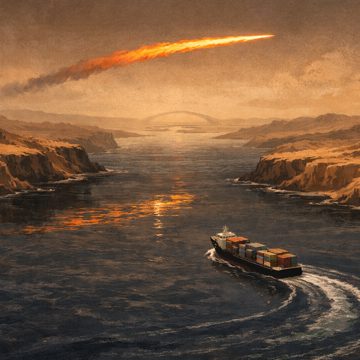
At the center of the latest shift is the Strait of Hormuz, the narrow waterway that carries a major share of global oil shipments. A provisional understanding has been discussed that would suspend attacks, allow the strait to reopen, and create space for a broader settlement. The idea has gained support from several regional governments that see continued war as a threat to trade, energy prices, and internal stability. For many of them, the conflict has underscored a hard truth: even states that have long distrusted Iran now see limited value in a war that could spiral beyond control.
That shift is also tied to a wider reassessment of US power in the region. The war exposed the limits of Washington's ability to deliver a decisive military outcome, protect every ally at once, and keep the conflict from spreading. Gulf states that have relied for decades on American security guarantees watched the US defend Israel from Iranian drones and missiles while failing to force a clear endgame. That has fed a growing sense that regional powers may need to manage their own security more directly, even if that means striking uneasy compromises with longtime rivals.
The diplomatic push has not been smooth. Reports of a deal being largely negotiated were followed by confusion, denials, and competing claims over what had actually been agreed. One version of the plan would include a 60-day ceasefire extension, some sanctions relief, release of frozen Iranian assets, and talks over uranium stockpiles. Iran's side has pushed back against any framing that suggests it has surrendered control over the strait or accepted terms that would strip it of core sovereignty. Tehran has also insisted that it is not seeking nuclear weapons and has blamed Israel for keeping the region in a state of war and instability.
Those tensions help explain why the ceasefire track remains politically volatile. A peace deal would not simply end the fighting; it would also force leaders to defend concessions at home and abroad. In Israel, any arrangement that leaves Iran with room to preserve parts of its nuclear infrastructure is likely to face fierce resistance. In Washington, critics have argued that any pause should be tied to a stronger rollback of Iranian capabilities. In Tehran, hard-line institutions and the security establishment will be wary of any agreement that looks like a retreat under pressure.
The political fallout is not limited to foreign policy. The war has sharpened divisions inside Iran's own system, where the Islamic Revolutionary Guard Corps holds enormous sway over security and state power. Rumors and claims about leadership change have circulated alongside broader uncertainty about how much room civilian leaders really have to steer policy. Even when reports of a presidential resignation or power shift prove overstated or unconfirmed, they reflect a deeper instability: the country is under military pressure, the economy is strained, and the balance between elected officials and the security apparatus remains heavily tilted toward the latter.
That matters because any ceasefire or peace framework will depend on who can actually deliver on Iran's side. If the military and security institutions dominate the response, negotiations may be more about preserving regime survival than making strategic concessions. If civilian officials gain more influence, there could be a small opening for a longer diplomatic reset. For now, the most likely outcome is a narrow deal aimed at stopping the immediate fighting, not resolving the underlying conflict.
The regional response has been equally revealing. Countries that once competed for influence have shown more willingness to align around de-escalation. Saudi Arabia, the United Arab Emirates, Qatar, Jordan, Bahrain, Pakistan, Turkey, and Egypt have all had reasons to support a pause, even if their broader interests differ. Some have feared retaliation, others have worried about shipping disruptions, and several have seen the war as a threat to the fragile economic recovery they have tried to preserve. The result is an unusual convergence: rivals are backing peace less out of trust than out of exhaustion.
That convergence does not mean the strategic rivalry is over. It means the war has changed the calculations. The more the conflict drags on, the more governments are forced to weigh the costs of escalation against the uncertain benefits of confrontation. Energy markets react immediately to any hint of closure or reopening in the strait. Military deployments carry the risk of miscalculation. And every delay in diplomacy increases the chance that a temporary truce will collapse under pressure from domestic politics or a single attack.
For the moment, the Iran war is producing a paradox. The violence has made peace more urgent, but also harder to secure. It has weakened confidence in American regional leadership while making neighboring states more eager to prevent a wider catastrophe. It has raised the profile of nuclear negotiations even as both sides insist on conditions that the other may find unacceptable. And it has turned internal political questions - including the role of Iran's security elite and the resilience of its civilian leadership - into part of the war itself.
Whether the next step is a durable ceasefire or another abrupt reversal, the conflict is now being shaped by diplomacy as much as by force. The outcome will depend not only on battlefield pressure, but on whether leaders can sell compromise to publics and power centers that have already paid a high price for the war.