
Iran missiles remain central to the growing Hormuz crisis, with new intelligence suggesting Tehran still has major strike capacity even as fears rise over a blockade, oil disruptions, and broader economic fallout.
Strait of Hormuziran missilesoil shockIran blockademissile capabilitiesglobal energy prices
Iran missiles are back at the center of global risk calculations because the military question and the energy question are now tightly linked. New intelligence assessments indicate that Iran still retains substantial missile capacity, including access to much of its launch network near the Strait of Hormuz. That matters because the same geography that makes the strait vital for oil shipments also makes it vulnerable to missile threats, mining, and ship delays that can ripple through the world economy.
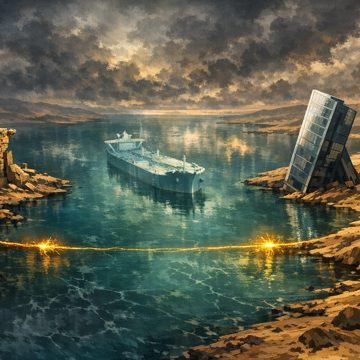
The immediate fear is not just another exchange of fire. It is the possibility that Iran uses missiles, mines, drones, and naval pressure together to make the strait effectively unusable for a prolonged period. Even a partial shutdown would slow tanker traffic, raise insurance costs, and force buyers to bid up crude long before any physical shortage is fully visible. In that sense, the missile arsenal is not only a battlefield tool. It is leverage over one of the most important chokepoints in global trade.
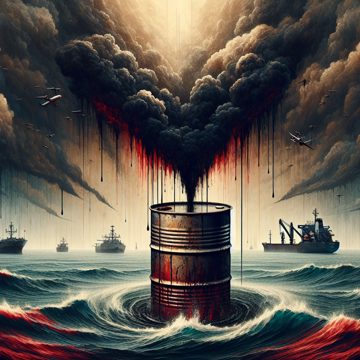
That leverage has already pushed oil into the center of the story. A prolonged disruption through Hormuz could send crude sharply higher, with gasoline prices following. Refiners, shipping firms, and governments would all be forced to plan around a supply chain that does not move quickly. Tankers take weeks to reach major destinations, and once storage systems begin to tighten, the lag between disruption and recovery can stretch for months. The result is a classic panic cycle: higher prices, slower growth, and emergency policymaking all at once.
The scale of the risk is what makes the current moment feel different from a routine military flare-up. The strait is narrow, heavily trafficked, and difficult to secure once mines or missiles are in play. Clearing hazards takes time, and even reopening a route does not instantly restore normal trade. If attacks or threats continue, shipping may remain cautious long after the immediate danger passes. That means the oil shock can outlast the fighting.
There is also a broader strategic point. Iran's missile inventory is important not just because of how many weapons it has, but because it gives Tehran options. A missile force can target bases, ports, air defenses, and maritime infrastructure without requiring a full-scale invasion or occupation. It can also be used to deter escalation by raising the cost of outside intervention. In a crisis over Hormuz, that makes missiles one of the main reasons markets and militaries alike are watching Iran so closely.
The economic consequences would not be limited to fuel. Higher energy costs feed into transport, manufacturing, food, and chemicals. Countries that rely heavily on imported oil would be hit first, but the shock would spread widely. In the developed world, that means inflation pressure could return just as growth slows. In the developing world, where energy imports take a bigger share of budgets, the impact could be far harsher. A blockade or near-blockade is not just a regional event; it is a global tax on movement and production.
Against that backdrop, the political debate around Iran missiles and Hormuz feels less theoretical than it did even a few days ago. Intelligence reports suggesting that Tehran still has much of its missile force intact challenge any assumption that its options are exhausted. If anything, the opposite may be true: as long as the missile threat remains credible, Iran can keep markets guessing about how far it is willing to go.
That uncertainty is also what makes the oil market so volatile. Traders do not need a perfect blockade to react. They only need to believe that shipments could be delayed, insurance could spike, or a key tanker lane could be hit. Once that belief takes hold, prices can move well before physical shortages appear. In other words, Iran's missile capacity has value even when it is not fired. The threat alone can reshape expectations.
The same logic explains why the rhetoric around this crisis has become so dramatic. Some observers argue that the worst-case scenario is being underestimated, with the possibility of a prolonged oil shock and a wider recession. Others believe the damage can still be contained if shipping lanes remain partially open and diplomacy reasserts itself. But both sides are responding to the same basic reality: Hormuz is not just another maritime route, and Iran missiles are not just another weapons system. Together, they form a pressure point with consequences far beyond the Gulf.
What happens next will depend on three things: whether Iran keeps the strait under direct pressure, whether outside powers can deter further escalation without widening the conflict, and whether energy markets can absorb a shock that may already be priced only partly into crude. If the standoff deepens, the world may face a supply squeeze measured not in days but in quarters. If it eases, the damage may still linger in higher costs and slower trade.
For now, the central lesson is simple. Iran missiles are not only a military headline. They are a key variable in the oil market, a test of maritime security, and a warning that a narrow waterway can still carry outsized power over the global economy.



Comments
No comments yet — be the first to share your thoughts.