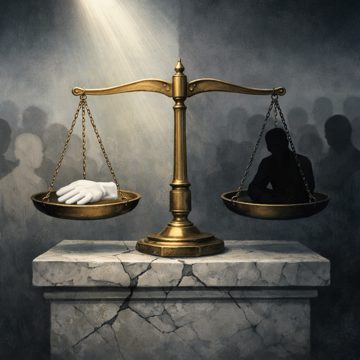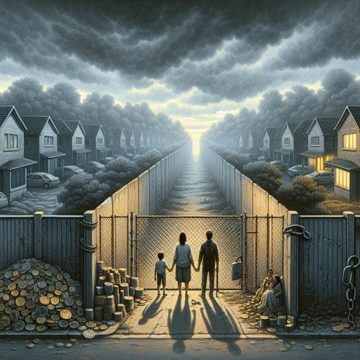
The financial crisis is back in focus as political spending fights, warnings about debt and corruption, housing pressures, and personal money stress all point to a broader sense of economic fragility.
personal financefinancial crisis2008 financial crisisGoldman Sachshousing crisissavingstax exemptionpolitical economy

The phrase financial crisis is again doing a lot of work in public life, and not just as a memory of 2008. It now captures a wider unease that reaches from national politics to household budgets. People are talking about wasteful spending, elite impunity, housing costs, and the strain of trying to stay financially afloat while institutions seem distracted or unresponsive. The result is a mood that feels less like a single event and more like a slow accumulation of pressure.
One strand of that anxiety is political. Large public projects and symbolic spending can look to many people like theater when basic needs remain unmet. A lavish building plan, a luxury ballroom, or a vanity project can be read as a sign that power is being used to reward status rather than solve problems. For critics, the deeper issue is not just the price tag. It is the idea that taxpayer money, donations, or other public resources can be redirected toward prestige while ordinary people are told to accept austerity, sacrifice, or patience. That resentment is especially sharp when the same political class is seen as benefiting from the rules it imposes on everyone else.
That anger connects directly to the way many people remember the 2008 financial crisis. The collapse of that era left behind a lasting suspicion that the most powerful institutions can take reckless risks, absorb public rescue, and then move on with few consequences. Banks, advisers, and political leaders were supposed to have learned lessons from that period, but the basic fear remains that the system still protects insiders first. When people hear talk about corruption, hidden projects, or money disappearing into opaque channels, it revives the older belief that financial pain is often socialized downward while gains are privatized upward.
There is also a more analytical side to the current conversation about financial crisis risk. Some of the concern is not about a dramatic crash tomorrow, but about the cumulative fragility of the economy: high housing costs, uneven wages, debt pressure, and the sense that a normal emergency could tip many households over the edge. That is why predictions of trouble often focus less on stock-market headlines and more on whether families can keep up with rent, mortgages, tuition, and basic savings goals. A crisis can be defined as much by reduced resilience as by a formal recession.
Housing remains one of the clearest pressure points. In many places, the dream of stable ownership has turned into a contest between rising prices, tax burdens, and limited supply. Even modest changes in property taxes or exemptions can matter a great deal when budgets are already tight. For homeowners, the question is not only whether they can buy a house, but whether they can keep it. For renters, the same pressures show up as rising monthly costs and fewer paths to accumulation. Housing, in that sense, is where macroeconomic strain becomes personal and immediate.
That personal side is easy to miss when the public focus stays on elite politics. A person trying to finish a degree, change careers, or build a savings cushion may use the phrase financial crisis in a very literal way. It can mean missing income, a sudden job change, an urgent deadline, or the fear that one delay will create a chain reaction. In that setting, silence from an adviser, a lender, an employer, or a landlord is not a minor inconvenience. It can threaten the next step in a life plan. The larger economy is experienced through small bottlenecks: a delayed response, a missed payment, a postponed degree, or one emergency expense too many.
That is why personal finance milestones matter so much in moments like this. Savings goals are not just about discipline or self-help. They are a way of building insulation against a system that can shift quickly. A first emergency fund, a paid-off debt balance, or a stable monthly surplus may not sound dramatic, but those markers can determine whether a family can absorb a layoff, a medical bill, or an unexpected move. In an age when people are increasingly aware of instability, those milestones become a form of private crisis management.
Goldman Sachs and other Wall Street names still carry symbolic weight because they embody the power structure that many people associate with the 2008 collapse. Their role in the financial system, and the broader culture of expertise around them, makes them shorthand for both competence and suspicion. When markets are calm, that expertise can look like reassurance. When conditions deteriorate, the same institutions are accused of missing the warning signs, softening the language, or profiting from complexity. The public does not need a repeat of 2008 to feel that imbalance. It only needs a sense that the people closest to the levers of finance are also the least exposed to the consequences.
The current financial crisis conversation is therefore not really about one thing. It is about a cluster of fears: political corruption, economic inequality, housing insecurity, and the possibility that ordinary people are again being asked to carry the cost of decisions they did not make. That mix helps explain why the phrase keeps resurfacing even when the economy is not in free fall. It names a broader condition of fragility, where trust is thin, savings are fragile, and the distance between public spectacle and private hardship feels uncomfortably small.
If there is a common thread, it is this: people want evidence that the system can still protect them before it asks them to endure another round of sacrifice. Without that, financial crisis stops being a historical event and becomes a permanent state of mind.