Brazil has replaced Wesley with Ederson after a thigh injury, while other countries are also making final World Cup 2026 adjustments. At the same time, broadcast rights are reshaping how fans in Paraguay and elsewhere will follow the Copa Mundial.
norwayworld cupcopa mundialcopa mundial 2026BrazilWesleyEdersonParaguaybroadcast rights

The Copa Mundial 2026 is already forcing national teams and broadcasters to make hard choices. Brazil has lost Wesley after a medical exam showed a muscle injury in the adductor of his left thigh, prompting a replacement call-up for Ederson. For a team chasing a sixth world title, the timing is difficult: with the tournament approaching, every roster decision carries extra weight, and even a single injury can change the shape of a squad built for a long run in the United States.
Brazil's federation said Wesley was re-evaluated by the medical staff and underwent imaging before the injury was confirmed. The move to bring in Ederson reflects a familiar World Cup reality: depth matters as much as star power. Teams can spend years building a core group, but the final weeks before the tournament often reveal how fragile that plan can be. A player expected to play a key role can disappear from the picture in one scan, and another player suddenly gets the chance to join the biggest stage in the sport.
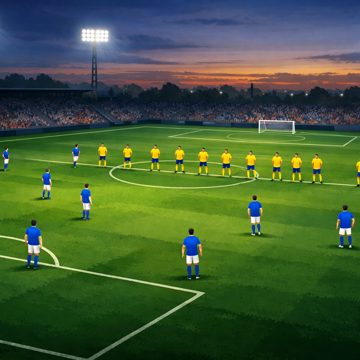
That same sense of anticipation is visible across the wider World Cup landscape. Norway's official team photo for 2026 drew attention not just because it marked another step toward the tournament, but because it showed how national teams are already crafting an identity before a ball is kicked. The image of a squad can become part of the story: a visual shorthand for confidence, style, and expectations. For some teams, the Copa Mundial is about results first; for others, it is also about projecting a new era.
There is also a growing sense that the 2026 tournament will be shaped by off-field changes as much as by what happens in the stadiums. In Paraguay, one of the country's long-running television homes for the World Cup will not carry the event for the first time in nearly half a century. That break with tradition matters because the World Cup is not only a sporting event; it is also a shared viewing ritual. For generations, fans associated the tournament with a specific channel, a familiar studio setup, and the feeling that the same place would always be there when the opening match arrived. Losing that continuity changes the experience, especially for viewers who have followed the competition the same way for decades.
The shift in broadcast rights also highlights the economics behind the Copa Mundial. Rights fees have become expensive enough that even established broadcasters can be pushed out, and new owners or larger media groups can step in to fill the gap. That creates a different kind of competition around the tournament: not just which national team is strongest, but which outlet can afford to bring the matches to viewers. For many fans, the practical question is simple - where will the games be shown? - but the answer reveals how much the business of football has changed.
At the same time, the tournament continues to carry the emotional pull that makes these roster and broadcast changes feel so important. Brazil's pursuit of a sixth world championship remains one of the defining narratives of the Copa Mundial 2026. Even an injury replacement becomes part of that larger story, because every player added to a squad is now a potential piece of a title chase. Supporters will debate whether a call-up is enough, whether a recovered player might still have a role, and whether the final list has the balance needed for a long tournament.
The broader pattern is clear: the World Cup is entering its final buildup phase, and the margins are tightening. Medical reports, squad announcements, and broadcast decisions are no longer background details. They are part of the main event. A thigh injury in one camp, a team photo in another, and a television rights change in a third all point to the same reality - the Copa Mundial 2026 is moving from planning into execution.
For Brazil, the immediate question is how quickly Ederson can integrate and whether the squad can absorb another change without losing momentum. For Paraguay, the question is where fans will watch. For everyone else, these developments are reminders that the World Cup is never just about the matches themselves. It is about the teams that arrive healthy, the players who seize a last-minute chance, and the media systems that decide how the world sees it all.
As the tournament draws closer, the stakes will only rise. Injuries will continue to reshape lineups. Broadcast maps will continue to change. And the Copa Mundial 2026 will keep building toward the moment when all of those moving parts finally meet on the field.