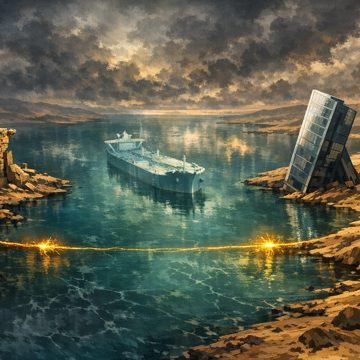
Talks linked to Trump and Iran are being shaped by Lebanon, maritime access, and the Strait of Hormuz, where even uncertainty can jolt oil markets. Tehran is seeking sanctions relief, while Washington wants nuclear limits and regional restraint.
Strait of Hormuzsanctionsiran dealhezbollahlebanontrump iranoil marketsnuclear talks

A possible Trump Iran deal is being pulled in two directions at once: diplomacy over nuclear limits and sanctions, and a wider struggle over Lebanon and the Strait of Hormuz. That combination makes the talks far more fragile than a simple bilateral agreement. Even if negotiators can settle the core terms, the arrangement could still be tested by fighting on the ground and by pressure over one of the world's most important shipping lanes.
At the center of the moment is a basic tradeoff. Washington wants Iranian restraint, especially around Hezbollah and other regional armed groups, along with tighter limits on enrichment and renewed access for inspectors. Tehran wants sanctions relief, access to frozen assets, and recognition that its security concerns are real. Those demands are not new, but the current setting is more dangerous because each side sees the other as having already broken trust in the past.
Iran's position is being shaped by both military and economic leverage. The country has suffered major damage from war and sanctions, but it has not collapsed. Its leadership remains defiant, and that defiance is tied to a belief that Iran still holds decisive cards. One of those cards is the Strait of Hormuz, through which a large share of the world's oil and gas passes. Any threat to traffic there can quickly ripple through shipping, insurance, fuel prices, and industrial supply chains.
That is why the Strait of Hormuz matters even when it is not formally closed. Uncertainty alone can be enough to move markets. If tankers face delays, extra fees, or the risk of interception, the cost of doing business rises immediately. In a tense standoff, the difference between open passage and restricted passage can affect the global economy within days. Energy reserves can soften the blow for a time, but they do not eliminate the underlying pressure.
The economic consequences are already visible. Higher fuel prices, especially in the United States and Europe, are feeding into broader inflation concerns. Diesel costs, freight rates, and shortages of key industrial inputs can all rise when energy flows are threatened. Fertilizer, aluminum, and helium are among the products that can be squeezed when shipping and refining costs climb. In that sense, the Hormuz issue is not only a military or diplomatic problem. It is also a supply-chain problem with immediate consequences for households and manufacturers.
Lebanon has become another flashpoint that could derail any agreement. Israel's fighting with Hezbollah has widened the diplomatic agenda beyond nuclear issues. Washington wants to reduce regional hostilities without letting the conflict spread further, but that is difficult when armed groups and state actors operate on different timelines. Iran says its leverage over Hezbollah is real but not absolute, while U.S. officials want Tehran to help restrain the group. That leaves both sides negotiating not just over what they control directly, but over what they can influence indirectly.
This is one reason the Trump Iran talks are so vulnerable. A deal may be announced, but implementation is where many agreements fail. One side may want immediate sanctions relief, while the other wants step-by-step verification. One side may demand a halt to military activity across multiple fronts, while the other wants a narrower security commitment. Each condition creates a point of friction, and each delay increases the risk that hardliners will argue the other side is acting in bad faith.
The broader strategic picture also matters. Iran sees itself as having survived pressure that was meant to force a political collapse. That survival has strengthened the hand of security institutions and made the leadership less likely to accept terms it views as humiliating. On the U.S. side, Trump is under pressure to show that threats and negotiations can produce results, but any deal that looks weak or temporary could face immediate criticism. That makes compromise harder, not easier.
There is also a question of who can spoil the process. Even if negotiators settle on paper terms for nuclear limits, sanctions, and maritime access, outside actors can still upset the balance. Renewed fighting in Lebanon, missile activity, or a sharp move around Hormuz could change the atmosphere overnight. A durable settlement would therefore require not just a U.S.-Iran understanding, but a wider regional pause that includes restraint from Israel and Hezbollah as well.
That wider requirement is what makes the current moment so unstable. The issues are linked, but not neatly. The nuclear file cannot be separated from sanctions. Sanctions cannot be separated from maritime access. Maritime access cannot be separated from regional warfare. And regional warfare cannot be separated from the political need in both Washington and Tehran to avoid looking like the side that gave too much.
For now, the most important fact is that Iran has enough leverage to make the world pay attention. The Strait of Hormuz gives Tehran a way to raise the cost of confrontation without firing a new shot. Lebanon gives it a second pressure point. Washington may still be able to secure a deal, but the terms will likely be complicated, conditional, and vulnerable to events beyond the negotiating table.
That is why the Trump Iran deal is not just about diplomacy in the abstract. It is about whether a fragile bargain can survive the pressure of war, sanctions, and chokepoints. If it fails, the cost will not be limited to the two governments involved. It will reach oil markets, shipping lanes, and economies far beyond the Middle East.