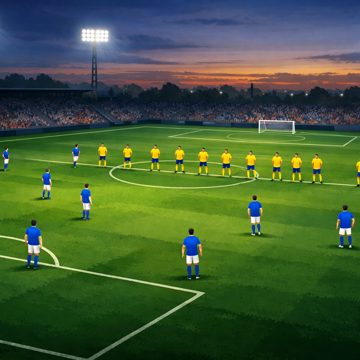
Belgium vs Iran in World Cup 2026 Group G has the feel of a measuring-stick match: Belgium bring star power and depth, while Iran arrive with structure, pace, and a habit of making games awkward for bigger names.
iransoccerBelgiumWorld Cup 2026Belgium vs IranGroup Gpreview

Belgium vs Iran in World Cup 2026 Group G is shaping up as one of the more intriguing fixtures in the opening stage, not because it is the flashiest pairing on the schedule, but because it asks a simple question: which side can turn its strengths into control when the margins are tight?
Belgium enter the group with the reputation of a team that should be able to dictate the tempo. Even in a recent 1-1 draw against Egypt, they showed the sort of attacking quality that makes them dangerous in almost any match. They created chances through movement, width, and individual quality, but they also left enough openings to remind everyone that possession and reputation do not automatically translate into a comfortable result. A goal from a set-piece scramble and a late equalizer highlighted a familiar theme: Belgium can look polished, but they still need sharper finishing and cleaner game management to separate themselves from organized opponents.
That matters against Iran. Iran are not the kind of opponent that usually gives away easy space or easy rhythm. Their recent 2-2 draw with New Zealand offered a good example of their profile: compact enough to stay in the game, quick enough to punish mistakes, and resilient enough to respond when the match shifts. Iran found goals from distance and through patient buildup, showing they can score in more than one way. That variety makes them dangerous in a group-stage setting, especially against a side like Belgium that may dominate the ball but cannot afford lapses in concentration.
The Group G context gives the match extra weight. In a short tournament, the opening games can shape the entire path out of the group, and neither side can treat Belgium vs Iran as a simple warm-up. Belgium are expected to aim for the top spot, but a draw or a slow start would increase pressure quickly. Iran, meanwhile, know that every point against a stronger opponent can alter the balance of the group and improve their chances of advancing. That creates a familiar World Cup dynamic: the favorite must prove it can impose itself, while the underdog tries to turn discipline into leverage.
Belgium's biggest advantage is still the quality across the front and midfield lines. They can threaten from wide areas, combine between the lines, and create chances from both open play and dead-ball situations. Even when the final pass is not perfect, they have enough players capable of producing a moment that changes the match. But the recent draw also suggested that Belgium can be vulnerable if the game becomes fragmented. If the tempo drops, if the finishing is wasteful, or if the back line is forced into repeated recoveries, the match can become much more difficult than expected.
Iran will likely lean into that possibility. Their best route is probably to keep the game compact, deny Belgium easy central access, and force attacks into predictable channels. They have shown they can survive pressure and still find moments going forward. If they can make Belgium chase the match without finding a breakthrough, the pressure will shift quickly. In a fixture like this, one well-timed transition or one set piece can change the entire tone.
There is also a psychological layer to Belgium vs Iran that makes it compelling. Belgium carry the burden of expectation, which can be useful if they score early but frustrating if they do not. Iran can play with more freedom, especially if they can keep the score level deep into the match. The longer the game stays balanced, the more likely it becomes that Belgium's patience is tested and Iran's confidence grows.
The recent results for both teams suggest that neither side should assume control will be enough on its own. Belgium's draw against Egypt showed that they can generate enough to stay alive but may struggle to convert dominance into separation. Iran's draw with New Zealand showed a team capable of answering setbacks and staying composed. Put together, those signs point toward a match that could be tighter than the names on paper suggest.
For Belgium, the key will be turning possession into pressure that matters. They cannot rely only on territory or on isolated moments from their most talented attackers. They need cleaner movement around the box, better timing on runs, and more certainty in front of goal. They also need to avoid the kind of defensive lapse that invites an opponent back into the match. Against a team like Iran, the cost of a single mistake can be high.
For Iran, the challenge is to stay brave without becoming stretched. Sitting too deep for too long can invite wave after wave of Belgian pressure, but overcommitting would open the spaces Belgium want. The balance will be in staying compact while still offering enough threat to keep Belgium honest. If Iran can force Belgium into frustration, then the match becomes less about talent and more about nerve.
That is why Belgium vs Iran stands out in World Cup 2026 Group G. It is not just a clash of teams from different football traditions; it is a test of whether Belgium can translate quality into control and whether Iran can turn organization into a result. The group stage often rewards the team that adapts fastest, and this fixture may come down to which side reads the game better once the first half-hour passes.
If Belgium start quickly, they have the tools to take command. If Iran keep them waiting, the match could become a grind that suits the underdog far more. Either way, this is the kind of World Cup meeting that can say a lot about both teams before the knockout race even begins.