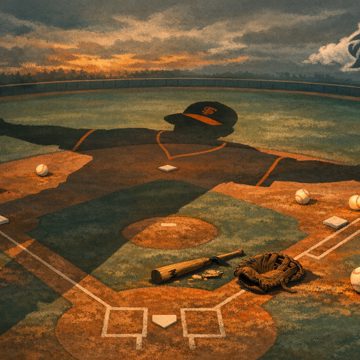
Savannah Bananas are drawing attention as a baseball brand that feels built for television, live events, and family entertainment. Their appeal comes from a mix of comedy, music, fan interaction, and a format that turns a game into a full-stage production.
entertainmentbaseballsavannah bananasmediafamily entertainmentlive showsports entertainment

Savannah Bananas have become one of the clearest examples of how sports can be packaged as entertainment first and competition second. The appeal is not just the baseball itself. It is the pace, the humor, the music, and the sense that every part of the experience has been designed to keep audiences engaged from the first pitch to the last out.
That makes the team stand out in a media landscape where live events are increasingly competing with streaming, short-form video, and endless on-demand options. A traditional game can still draw loyal fans, but Savannah Bananas offer something different: a format that feels closer to a touring show than a standard ballclub. The game is still there, but it is wrapped in choreography, crowd participation, and a constant stream of moments meant to be shared, remembered, and replayed.
That entertainment value is a major part of the brand. The team has built an identity around spectacle without losing the basic structure of baseball. There are rules, innings, and competition, but those parts are presented with a sense of play that broadens the audience beyond the usual sports crowd. For many people, the attraction is not whether the team is pursuing a conventional championship path. It is the feeling that attending a Savannah Bananas event means seeing something unusual, lively, and deliberately fun.
This approach also helps explain why the team has become such a media object. A performance-based sports brand is easy to film, easy to clip, and easy to market. The visual style is part of the product. Costumes, dancing, stunts, and crowd interaction all translate well to screens, which gives the team an advantage in a culture where attention is often won by what can be condensed into a few seconds. In that sense, Savannah Bananas are not only a baseball act but also a content machine built for modern entertainment habits.
The broader appeal comes from accessibility. People who may not follow baseball closely can still understand the appeal of a loud, colorful, family-friendly show. The event does not require deep knowledge of standings or statistics to enjoy. That lowers the barrier to entry and creates a more inclusive atmosphere, especially for casual fans, children, and groups looking for an outing that feels more like a night out than a sporting obligation.
There is also a nostalgia factor at work. The Savannah Bananas package sports in a way that recalls old-fashioned barnstorming, traveling variety acts, and the kind of communal entertainment that used to anchor local culture. At the same time, the presentation is unmistakably contemporary. The humor is fast, the pacing is tight, and the production values are built for a world where every live moment can become a clip or a highlight.
That combination helps them occupy a rare space in entertainment and media. They are not simply a novelty, because the show has clearly sustained interest over time. But they are also not a conventional sports property. Their success suggests that audiences are open to formats that blur categories, especially when the result feels energetic and distinct from the routine experiences offered elsewhere.
The model also reflects a larger shift in how entertainment is consumed. Viewers and attendees increasingly want participation, not just observation. They want events that feel personal, interactive, and memorable. Savannah Bananas answer that demand by making the audience part of the performance. The crowd is not just watching a game; it is being invited into a shared spectacle.
That matters in media because live entertainment still has a special value. Even in an age of endless digital content, people continue to show up for events that feel ephemeral and communal. A Savannah Bananas game offers that kind of moment. It is something to attend in person, talk about afterward, and revisit through clips and photos. The experience is designed to travel beyond the stadium.
The team also benefits from a clear identity. In a crowded entertainment market, being memorable is half the battle. Savannah Bananas have a name, a style, and a format that are instantly recognizable. That consistency helps the brand move across platforms and audiences without losing its core appeal. Whether someone encounters it through a live event, a highlight package, or a passing reference, the impression is the same: this is baseball reimagined as a show.
That kind of reinvention can be polarizing in traditional sports circles, where some purists prefer a stricter separation between play and performance. But the response from broader audiences suggests that there is room for both. Savannah Bananas do not replace conventional baseball. They offer a parallel experience that uses the sport as a foundation for entertainment.
In the end, that may be the reason the brand has found such traction. It recognizes that the modern audience often wants more than a scoreline. It wants energy, personality, and a sense that the event itself is the story. Savannah Bananas deliver all of that while keeping baseball at the center, which is why they have become such a notable name in entertainment and media.