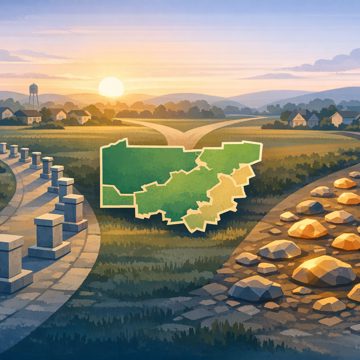
The Pennsylvania 7th District Democratic primary is drawing attention as a guide to the party's 2026 strategy, with a race shaped by labor politics, national anti-Trump energy, and questions about which kind of candidate can win in a battleground seat.
pennsylvania 7th district democratic primaryPennsylvania primary election guideDemocratic primaryHouse primarybattleground districtPennsylvania elections

The Pennsylvania 7th District Democratic primary has become more than a local contest. It is now being watched as a useful guide to where Democrats may be headed in a year when control of the House could again run through suburban and working-class battlegrounds. The race sits at the intersection of two competing instincts inside the party: one that emphasizes labor roots and economic populism, and another that leans on national anti-Trump momentum, professional credentials, and a sharper reform message.
That tension is what makes the primary matter beyond Lehigh Valley. The district is competitive enough that the nominee will likely need to appeal to union households, moderate voters, and the energized Democratic base at the same time. In that setting, the primary is less about a simple left-right split than about which biography and message can carry the most weight in a district that can decide the balance of power in Washington.
One candidate type in the race is built around local labor identity and a plainspoken argument about fairness. That approach speaks directly to voters who want a nominee with roots in the region and a record of organizing around wages, working conditions, and public services. It reflects a broader Democratic belief that the party should not leave behind the language of class and community, especially in places where voters still respond to candidates who sound like they understand the daily pressures of work, rent, and family budgets.
The other model centers on national experience and a more explicit confrontation with the current political climate. That style is attractive to voters who want a candidate with government credibility, legal or military service, and a message tied to accountability and institutional repair. In a cycle defined by frustration with Washington, that profile can be powerful, especially if it is paired with a sharp case against Republican control and a promise to restore basic standards in government.
What makes the Pennsylvania 7th District Democratic primary especially instructive is that both approaches are trying to answer the same question: what kind of Democrat can win a battleground district now? The answer may not be the same as it was in past cycles. A candidate who can speak to unions and working families while still sounding credible to suburban independents may have the edge. But a candidate who is too tailored to one lane can struggle to build the broad coalition needed in November.
That dynamic mirrors a wider pattern across this election season. Primary races in other states have shown Democrats testing different formulas for competitiveness. In some places, candidates with strong labor ties have done well by emphasizing bread-and-butter economics and local trust. In others, nominees with sharper national profiles have broken through by framing the election as a direct response to Donald Trump and the broader direction of the Republican Party. The Pennsylvania 7th District sits right between those two impulses.
For voters looking for a Pennsylvania primary election guide, the key point is that this race should not be read only through the lens of ideology. It is also a practical test of electability. Democrats in a district like this need a nominee who can survive both a primary and a general election without losing too much ground with either the base or swing voters. That means campaign style, biography, and message discipline all matter as much as policy positions.
The district's importance also comes from its place in the national map. House control is likely to depend on a relatively small number of competitive seats, and Pennsylvania remains one of the most important states in that fight. A strong Democratic nominee in the 7th could help define the party's broader playbook, especially if the campaign shows that a candidate rooted in local economic concerns can still build a message that resonates in a polarized national environment.
At the same time, the race highlights a familiar challenge for Democrats: balancing authenticity with strategic appeal. Voters often reward candidates who seem grounded and direct, but they also want nominees who can withstand Republican attacks and communicate clearly on national issues. In a district like this, the winning formula may involve some mix of labor credibility, government experience, and an ability to speak to frustration without sounding like a national consultant's script.
The broader lesson from the Pennsylvania 7th District Democratic primary is that the party is still searching for a durable model in battleground territory. There is no single type of Democrat who automatically fits every competitive district. Instead, the race suggests that success may depend on whether a candidate can combine local trust, economic message clarity, and enough national relevance to motivate voters who are tired of the status quo.
That is why this primary matters. It is not just about one nomination. It is about how Democrats intend to compete in districts where the margin between winning and losing is thin, the electorate is mixed, and the stakes are national. The result will offer a clearer sense of whether the party is leaning toward a labor-forward, community-based message or a more institutional, anti-Trump frame - and whether either approach can still carry a battleground seat in Pennsylvania.