Paris Hilton remains a useful reference point for fashion, ads, and beauty because her image still moves easily between glamour, nostalgia, and reinvention. Recent looks, campaigns, and hair changes show how celebrity style keeps cycling through old icons and new platforms.
nostalgiastyleparis hiltonfashion editorialsmodelingcelebrity adsbeautyhairY2K

Paris Hilton keeps resurfacing as a touchstone for how celebrity style works now: part fashion editorial, part commercial shorthand, part nostalgia machine. Her name still carries the same mix of glossy glamour and playful self-parody that made her such a durable image in the first place. Whether the focus is a campaign appearance, a beauty look, or a throwback reference, Paris Hilton remains instantly legible in a way few celebrities are.
That durability is tied to how her image has always been built. She was never just a famous person in clothes; she became a visual idea. Platinum hair, tiny silhouettes, rhinestone shine, and an attitude that could read as both detached and knowingly theatrical all helped make her a template for early-2000s celebrity style. That template still shows up in fashion editorials and advertising because it is easy to recognize and easy to remix. The appeal is not only the look itself, but the memory of the era it represents.
Recent attention around her appearance has also highlighted how much hair remains central to the Paris Hilton brand. A shift from blonde to brunette can feel bigger than a simple color change because her hair has long been part of the iconography. In fashion imagery, hair is never just hair; it is a signal of character, class, mood, and era. Paris Hilton's blonde has historically suggested a kind of polished excess, while a darker shade changes the whole reading of the face and outfit. Even a temporary transformation can make the public image feel newly edited.
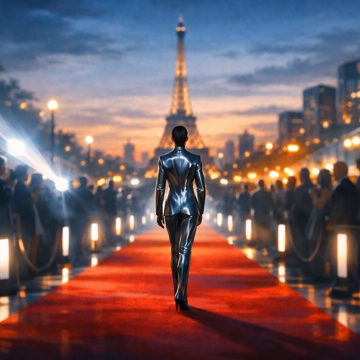
That makes her especially useful in fashion stories that depend on contrast. A celebrity can be styled into a luxury fantasy, a retro callback, or a knowingly ironic pose, and Paris Hilton can fit all three. Her image has always moved easily between high polish and camp. That is one reason she remains a point of reference for models and editors looking to stage something that feels both current and archival. Her presence can make a shoot feel like a memory of celebrity itself.
The same logic explains why she keeps showing up in commercial work and product tie-ins. Celebrity appearances in ads are not only about selling a product; they are about borrowing a mood. Paris Hilton sells an atmosphere of instant recognition, and that matters in a market where brands often want consumers to feel they already know the story before they even see the item. A cameo, a voice cue, a signature song, or a familiar visual palette can do more than a long explanation. The image arrives with its own history.
That history is especially effective when it is folded into Y2K styling. Low-rise references, puka-shell nostalgia, bandannas, and other early-2000s details all pull from the same visual archive that made Paris Hilton such a defining figure. These pieces are not just fashion accessories; they are memory triggers. They signal a time when celebrity branding was loud, playful, and everywhere at once. In that sense, Paris Hilton is not only a person but a shorthand for a whole design language.
There is also a practical side to this kind of iconography. Beauty and fashion fans often treat celebrity looks as something to be studied, copied, or stored away for later. That can mean stashing favorite products, tracking down thrifted brand finds, or saving screenshots of a look that feels worth revisiting. Paris Hilton fits neatly into that habit because her style has always been collectible. A look from her can feel like an object to archive rather than just a moment to admire.
The same instinct explains why older beauty methods and hair tools keep coming back into view. Historical hair weaving kits, clip-ins, and other volume-building techniques may sound far removed from a modern celebrity profile, but they belong to the same larger story. Hair has always been a technology of image-making. Whether the goal is height, fullness, length, or a specific silhouette, the tools matter because they help create the illusion that the camera rewards. Paris Hilton's own hair history sits inside that tradition.
What makes her especially interesting is how easily her image crosses from fashion into pop memory. She can stand in for a comic-strip level exaggeration of wealth and glamour, but that exaggeration is part of the point. Her public persona has always leaned into the idea that celebrity can be drawn in bold lines. That is why she still works as a reference in editorial styling: the look is simple enough to read at a glance, but layered enough to carry irony, nostalgia, and aspiration at once.
This kind of cultural staying power also depends on platforms that keep old images circulating in new ways. Online platforms have made it easier for celebrity looks to be revived, clipped, remixed, and reinterpreted long after their original moment. A campaign appearance or a red-carpet photo no longer lives only in the present tense. It becomes part of a visual database that can be searched, compared, and reused. Paris Hilton benefits from that environment because her image is already built for repetition.
Even literary and historical frames can fit around her. Theatrical self-presentation, social ambition, and the performance of status are not limited to fashion. They also appear in novels and cultural criticism, where characters and symbols are often read through the same lens of appearance and power. That is why an icon like Paris Hilton can be discussed alongside older ideas of spectacle and identity. She is not just a celebrity of a certain era; she is a case study in how image can become narrative.
In the end, Paris Hilton remains relevant because she represents a style of fame that still feels current: highly visual, easily reproduced, and always aware of itself. Fashion editorials borrow from her because she makes glamour look both effortless and constructed. Advertisers use her because she can turn a product into a memory. Beauty fans follow her because her hair and makeup changes still read like events. And the wider culture keeps returning to her because she remains one of the clearest examples of a celebrity who became a brand, then a reference, then an icon.
That is why Paris Hilton still matters in fashion and modeling. She is not simply a throwback. She is a living archive of the way celebrity style gets made, sold, and remembered.