A Maryland woman spent months in jail after facial recognition technology helped drive her arrest, renewing scrutiny of how police use AI, how warrants are approved, and whether human verification is being skipped.
AIaccountabilityMarylandfacial recognitionpoliceprobable causewarrantbailwrongful arrestsurveillance

A Maryland case involving a woman who spent months in jail after being wrongly identified by facial recognition has become a sharp warning about the limits of police use of AI. The core failure was not just that the technology produced a bad match, but that officers appear to have treated that match as enough to move forward without enough independent verification.
That is exactly the danger critics have long warned about: when a machine-generated result is treated as if it were a neutral truth, human judgment can become lazy, rushed, or absent. Facial recognition can be useful as a lead, but it is not a substitute for investigation. If a tool can point police toward a suspect, it should also trigger stronger checks, not weaker ones.
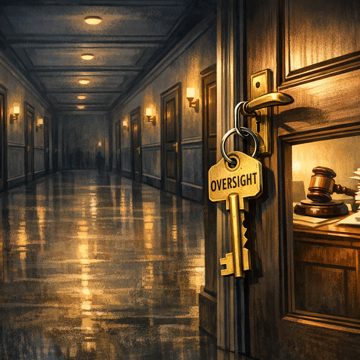
The case has also raised basic questions about procedure. Maryland law is widely understood to prohibit facial recognition from being the sole basis for probable cause, which leaves an obvious question: how was a warrant obtained if the match was so central to the arrest? If police did additional verification, that has not been clearly explained. If they did not, the failure goes beyond a bad algorithm and into a breakdown in oversight.
That breakdown matters because the cost of error falls on the person arrested, not on the system that made the mistake. The woman reportedly remained jailed for months, and the fact that she may not have been able to post bail does not make the underlying error less serious. In many cases, people with limited resources remain in custody for far longer than wealthier defendants would, even when the charges are weak or the identification is shaky. That reality makes due process protections even more important.
The larger problem is that police departments often adopt advanced technology faster than they adopt safeguards. Facial recognition is sometimes described as an aid, not the final decision-maker, but that distinction only matters if officers actually follow it. A tool that can lead to an arrest should be treated as one piece of evidence among many, with confirmation from documents, witnesses, physical identifiers, and plain common sense.
What happened in Maryland is also part of a broader pattern. Similar mistakes have been reported in other states, where people with IDs, credit cards, license plates, and other identifying records were still hauled into the system because software said they resembled someone else. That should be a red flag for any agency using the technology. If a person can prove who they are and still be arrested, the process is not serving justice.
The answer is not to pretend the technology can never be used. It is to impose a much higher standard before it can affect someone's liberty. Every facial recognition match that leads to an arrest should require rigorous human review, documented confirmation, and clear accountability for the officers and supervisors who sign off on it. If those steps are missing, then the arrest is not careful policing. It is negligence dressed up as innovation.
There is also a policy question about who pays when this goes wrong. Taxpayers often end up covering settlements, which can make agencies less accountable than they should be. Some argue that officers who ignore procedure should face personal consequences, especially when qualified immunity shields them from liability. Others say the state itself should pay, since the state authorized the system and the arrest. Either way, the public should not be left with the bill while the institution escapes meaningful reform.
The Maryland case lands at a time when surveillance tools are spreading into everyday life. Facial recognition is only one part of a larger ecosystem that includes license plate readers, location tracking, and other systems that can quietly build a picture of where people go and what they do. The more these tools are normalized, the easier it becomes for officials to lean on them instead of doing the slower work of verification.
That is why this case matters beyond one arrest. It is a reminder that AI does not remove responsibility. It shifts it. When police rely on a statistical model, they still have to answer for the result. If they do not verify before they arrest, detain, or seek a warrant, then the problem is not the machine alone. It is a human institution choosing convenience over caution.
The woman at the center of the case may pursue damages, and she should. But the deeper lesson is structural. Law enforcement cannot be allowed to use technology as a shield against accountability. If facial recognition is going to remain part of policing, then the law needs to make one thing unmistakably clear: a machine match is not enough to take away a person's freedom.