
Redistricting in Virginia is now part of a wider fight over gerrymandering, with court rulings and new maps shaping which party can win House seats before voters cast a ballot.
gerrymanderingvoting rightsredistricting in virginiaelection impactHouse majorityVirginia Supreme Courtcongressional mapspartisan redistricting
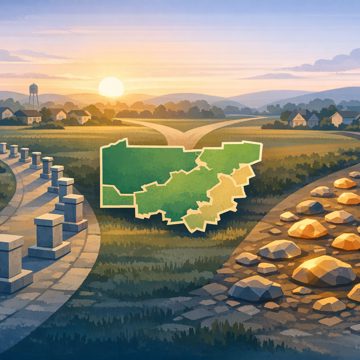
Redistricting in Virginia has become much more than a state-level map fight. It is now a national test of how much power courts, legislatures, and ballot measures can wield over the balance of the U.S. House before Election Day even arrives. The stakes are not abstract: a single map can decide whether several districts tilt toward one party, whether incumbents are forced into tougher races, and whether voters get a real chance to choose their representatives or only ratify lines already drawn for them.
That broader fight sharpened after a series of rulings and map changes across the country that appeared to hand Republicans a possible advantage in the next Congress. In Virginia, a voter-backed redistricting plan that could have created four additional Democratic-leaning seats was blocked by the state Supreme Court, wiping out a major chance for Democrats to improve their odds in the House. Supporters of the plan had argued that the map reflected the will of voters and could correct years of partisan line-drawing. Opponents saw it as an attempt to lock in power through the courts rather than through elections.
The Virginia case matters because it sits at the intersection of two different kinds of redistricting fights. One is partisan gerrymandering, where maps are drawn to maximize one party's advantage. The other is racial gerrymandering, where district lines can dilute the voting strength of Black and other minority communities. Both issues shape who gets represented and how competitive districts are, but they often move through the legal system in different ways. In Virginia, the immediate consequence was political: four potential Democratic gains disappeared before the midterms. Nationally, the larger message was that courts may increasingly determine the structure of electoral competition itself.
That message has been reinforced by developments elsewhere. In Alabama, the Supreme Court cleared the way for a map that could weaken Black voting power even after the same state had been told to create a second majority-Black district. In Tennessee, voters and advocacy groups have tried to stop a map they view as racially rigged. In Louisiana, a separate ruling on racial gerrymandering has been used to justify new maps that could cost Democrats a House seat. Taken together, these decisions suggest that redistricting is being shaped less by neutral principles than by a set of legal rulings that can shift quickly and often favor the side already in power.
Virginia is especially important because it has become a symbol of how redistricting can be used to change the electoral map without changing a single vote. A district plan can create safe seats, make a district more competitive, or split communities in ways that dilute their influence. When four seats are at issue, the effect can be large enough to alter the national House majority. That is why the Virginia ruling drew so much attention: it was not just about the state legislature or the governor's office, but about the architecture of Congress itself.
The practical impact on elections is straightforward. If one party can shape more favorable districts, it can reduce the number of competitive races and raise the odds of winning control of the chamber. That can matter more than campaign messaging or candidate quality in some districts. A party with a structural advantage can survive bad national conditions, while the other side must run up margins in a smaller number of winnable seats. In that sense, redistricting in Virginia is part of a broader national contest over whether the House is decided by voters or by line-drawers.
There is also a timing problem. These fights are happening close enough to elections that court rulings and map changes can scramble primaries, confuse candidates, and leave campaigns with little time to adapt. In several states, new lines have appeared or disappeared just as voting was about to begin. That creates uncertainty for local election officials and for voters who may suddenly find themselves in new districts, facing new candidates, or watching a race become noncompetitive overnight.
The deeper concern is that repeated map changes can normalize a system in which party control determines the rules before the first ballot is cast. That is why the Virginia case has been read alongside the Alabama and Tennessee disputes and the broader wave of redistricting battles across the South and Midwest. The pattern suggests a country where the fight over representation is increasingly being settled by courts and legislatures rather than by voters at the ballot box.
For Democrats, the loss in Virginia is a reminder that even when ballot measures or state-level reforms appear to open the door to fairer maps, those gains can be reversed by judicial action. For Republicans, the sequence of rulings and map changes offers a path to preserving or expanding a House edge without needing a wave election. For voters, the result is a system that can feel less like competitive democracy and more like a prearranged contest.
That is why redistricting in Virginia matters beyond Virginia. The state has become a case study in how map drawing can shape national power, how courts can alter the partisan balance of Congress, and how election outcomes can be influenced long before ballots are counted. If the next House majority is decided by a handful of lines on a map, then the real fight is not only over who wins the election, but over who gets to define the election in the first place.




Comments
No comments yet — be the first to share your thoughts.