Trump's impeachments remain part of the historical record, even as allies push to erase or minimize them. The larger fight is over accountability, the meaning of impeachment, and whether political institutions can still restrain abuse of power.
senateimpeachmentTrumpaccountabilityCongressconstitutional processpolitical powerhistorical record

Impeachment is not a footnote that can simply be wished away. Once a president has been impeached, that fact becomes part of the historic record, and no later attempt at revision can make it disappear. That is why efforts to minimize or erase Trump's impeachments are more than symbolic. They are part of a larger struggle over accountability, memory, and whether political power can be insulated from consequences.
Trump remains the only president to have been impeached twice, and that distinction has become central to how his presidency is judged. Supporters often frame the impeachments as partisan attacks, while critics see them as a necessary response to conduct that pushed against the limits of the office. Either way, the repeated impeachment proceedings underscored a basic truth: the presidency is not above scrutiny, and the constitutional process exists precisely for moments when a president's conduct is seen as dangerous or abusive.
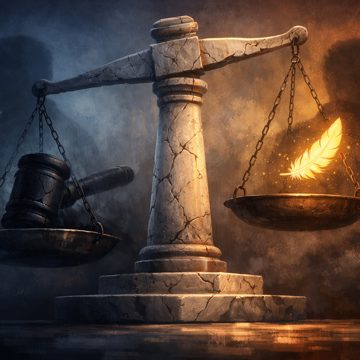
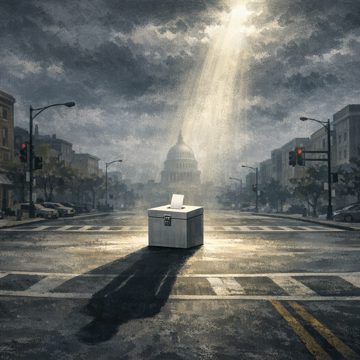
The debate over impeachment also exposes a deeper problem in American politics. Impeachment is a political process, not a criminal trial. It begins in the House of Representatives and depends on the willingness of lawmakers to act. Even when a president is impeached, removal requires a two-thirds vote in the Senate, a threshold that is intentionally difficult to reach. That design makes impeachment a high bar, but it also means that a president can survive the process even after serious allegations have been aired in public.
That is exactly what happened with Trump. He was impeached, but not removed. For some, that outcome is proof that the system worked as intended. For others, it is evidence that partisanship, fear, and loyalty can overwhelm institutional checks. The result is a president who can claim vindication despite a record that includes impeachment, criminal convictions, and repeated allegations of misconduct.
The fight over Trump's impeachments is also tied to the broader question of whether political accountability still exists in a meaningful form. Many critics argue that the answer is no, at least not consistently. They point to the way Trump has been protected by allies, by institutional delay, and by a political culture that often rewards defiance more than responsibility. In that view, impeachment becomes less a remedy than a test of whether any part of government is still willing to confront wrongdoing.
That frustration is intensified by the perception that standards are applied unevenly. Trump has often been treated as an exception, a figure for whom the ordinary rules do not quite apply. He has been defended as a fighter, a victim, or a necessary disruption, even when his behavior would have ended the careers of others. That double standard is one reason impeachment matters so much. It is one of the few formal tools available when a president is seen as abusing power, lying to the public, or putting personal interest ahead of the country.
The historical comparisons surrounding Trump are harsh for a reason. Critics describe him as uniquely corrupt, narcissistic, and destructive. Some go further and argue that he is among the worst public figures in modern history because of the scale of the harm associated with his presidency and the movement around him. Others draw a line between Trump and earlier controversial leaders such as Andrew Jackson or Richard Nixon, noting that those presidents were flawed and often harmful, but still believed they were acting in the national interest. Trump, by contrast, is widely seen by his detractors as acting primarily for himself.
That distinction matters. A president who is selfish is not the same as a president who is indifferent to the country itself. Critics argue that Trump has repeatedly shown contempt for institutions, facts, allies, and even the basic obligations of public service. In that reading, impeachment is not just about one act or one scandal. It is about a pattern.
The political system has struggled to respond to that pattern. Some of Trump's defenders argue that impeachment has been overused or weaponized. His critics respond that the greater danger is normalization: the gradual acceptance of conduct that would once have been disqualifying. If a president can survive impeachment, criminal conviction, and repeated scandals while still maintaining a loyal base, then the meaning of accountability begins to erode.
There is also a practical question. If impeachment is meant to protect the republic from serious abuse, what happens when the institutions charged with enforcing it are unwilling to act? That question has no easy answer. Congress can impeach, but it cannot force political courage. The Senate can hold a trial, but it cannot manufacture a supermajority. Voters can punish leaders, but only if they are willing to prioritize accountability over loyalty, grievance, or tribal identity.
That is why Trump's impeachments remain important. They are not just relics of a past presidency. They are markers of a constitutional system under stress. They show what happens when a president pushes hard against the boundaries of power and when the response is split between alarm, denial, and exhaustion.
In the end, impeachment is both a legal and moral signal. It says that conduct in office has crossed a line serious enough to warrant formal condemnation. Whether that signal leads to removal, resignation, or political fallout depends on the strength of the institutions around it. In Trump's case, the signal was loud, but the consequences were incomplete.
That incompleteness is the story. Trump was impeached twice, and that fact cannot be erased. The larger question is whether the country has learned anything from it. If the answer is no, then impeachment will remain what it has too often become in the Trump era: a warning that everyone heard, and too few acted on.