CA governor race polls are highlighting a crowded contest where a few candidates are separating, but the real story is how the primary rules could shape who survives. Support for transit, ranked choice voting, and fears of strategic voting all sit behind the numbers.
state politicshigh-speed railca governor race pollsCalifornia governor raceranked choice votingjungle primarypollingearly voting

CA governor race polls are increasingly being read as a test of more than candidate strength. They are also exposing the mechanics of the state's primary system, where a crowded field can matter as much as ideology, endorsements, or debate performance. The latest picture is not just about who is leading. It is about which candidates can avoid being squeezed out when the field narrows and the top two advance.
In the Democratic lane, the race appears to be splitting between candidates who want to sound pragmatic and those who want to sound bold without overpromising. Several candidates have signaled support for major state infrastructure projects, including California's high-speed rail effort, but few have committed to large new funding increases. That caution reflects a broader pattern in the race: candidates want to be seen as serious about big projects, yet they are wary of attaching themselves to expensive promises that can be attacked later.
That tension is especially visible around California high-speed rail. Some voters want a governor who will push the project harder and treat it as a long-term state priority. Others want a candidate who will force a harder reset, arguing that the project has to confront cost overruns and management problems before it can claim more money. The divide is not simply pro-rail versus anti-rail. It is about whether the next governor should keep the project alive through steady support, overhaul it to move faster, or demand a more dramatic reckoning before spending more.
That same dynamic is shaping how voters read the candidates themselves. One candidate with a long record on transit is seen as having the strongest background for supporting rail and public transportation more broadly, but doubts remain about whether that experience can translate into a real primary surge. Another candidate is viewed as the establishment choice, which may help with organization and broad acceptability, but can also make it harder to inspire voters looking for a sharper break from the current approach. A third has tried to position himself as the candidate willing to rethink the project, though that can sound either refreshingly decisive or dangerously indecisive depending on the audience.
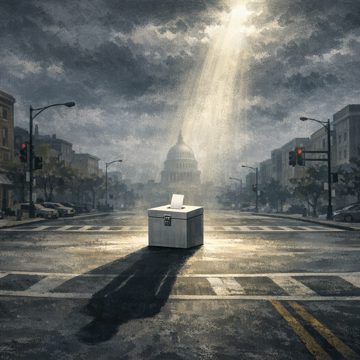
The polls also matter because the race is not operating like a normal single-front contest. California's jungle primary creates a math problem as much as a political one. With so many names on the ballot, a candidate can be well known, broadly acceptable, and still miss the runoff if support is scattered. That has fueled concern that two candidates from the same party could advance while another faction gets shut out, even if the broader electorate is not strongly aligned against them.
That concern has pushed attention toward voting systems as much as candidates. Ranked choice voting keeps coming up as a possible fix, with some arguing that it would reduce the risk of strategic voting and better reflect voter preferences in a large field. STAR voting has also been floated as an alternative way to compare candidate support. The interest in these systems says something important about the current race: the structure of the contest is now part of the contest itself.
Some voters are looking at the polls and seeing a simple front-runner picture. Others see a field where the top tier is still unstable and where a late shift could matter a great deal. In that reading, the question is not just who is polling first today, but who can survive a long primary without being boxed out by vote splitting. That is why the race is being discussed in terms of math, not just message.
The same logic applies beyond California. Other governor races have shown how quickly a crowded field can reshape expectations, and how polling can become a proxy for whether a party is unified or fragmented. But California is a special case because the primary rules amplify the risk. A candidate does not need a majority to stay alive, only enough support to finish in the top two. That can reward broad appeal, but it can also reward a candidate who is merely the least objectionable option to the largest number of voters.
There is also a practical question about turnout and timing. Early voting in some places can lock in impressions before all the candidates have fully separated themselves. Once ballots go out, momentum can become self-reinforcing. A candidate who looks viable early can attract more attention, while a candidate who starts behind may never catch up, even if the field changes later. That makes the polling even more consequential: it is not only a snapshot, but a signal that can influence how people cast ballots.
The broader atmosphere around the race has been unusually mixed. Some voters want a governor focused on infrastructure and transit. Others are more interested in whether the next administration can restore trust in state government and avoid the kind of open-ended promises that leave projects underfunded and overextended. Still others are reacting to the primary itself, arguing that the system encourages tactical behavior and punishes clarity. The result is a race where policy, personality, and procedure are all entangled.
That is why the latest CA governor race polls should be read with caution. They do indicate which candidates have traction. But they also reflect a contest in which the rules may matter nearly as much as the margins. A candidate can look strong in a poll and still be vulnerable if the field stays crowded. Another can look modest and still have a path if support consolidates at the right moment.
For now, the clearest takeaway is that California's governor race is not just about who is ahead. It is about who can survive the structure of the race long enough to turn polling strength into a place in the runoff. And on issues like high-speed rail, the candidates are being judged not only on what they support, but on whether they can make those promises sound credible in a state that has heard a lot of big plans before.