Across fiction, games, and speculative theories, ancient aliens remain a durable idea: a way to explain lost technologies, secret histories, and the sense that humanity arrived late to a much older universe.
ancient aliensspeculative fictionUFO lorelost civilizationsscience fictionLovecraftrole-playing gamesUAP

Ancient alien ideas keep resurfacing because they do several things at once. They turn mystery into history, make old ruins feel charged with meaning, and offer a dramatic answer to a simple question: what if humanity is not the first intelligent species to leave a mark on Earth or the wider cosmos?
That basic premise appears in very different forms. In one strand, it is treated as a serious claim about hidden histories, missing scientists, unexplained deaths, and advanced technology. In another, it becomes a storytelling device for science fiction, fantasy, and role-playing worlds, where alien visitors seed human civilization, leave behind strange machines, or build civilizations long before the present era. In both cases, the lure is the same: the universe feels larger when it is full of older things.
One recurring theme is the effort to connect scattered events into a single pattern. Lists of dead or missing researchers, defense-adjacent figures, and inventors with unusual projects are sometimes assembled as if they point toward a larger cover-up. The names range from physicists and engineers to military officers and authors tied to UFO culture. Some cases involve unexplained circumstances, some are ordinary tragedies, and some are simply folded into a narrative because they sit near topics like free energy, anti-gravity, or UAP research. The pattern is compelling to believers because it seems to gather disparate details into one frame. Critics, by contrast, see selection bias: many unrelated lives are being placed in the same bucket and treated as evidence of design.
That tension between pattern and coincidence is part of why ancient alien thinking persists. It offers a ready-made structure for uncertainty. If a death is strange, if a project was unfinished, if a scientist worked on an unconventional idea, the story can be enlarged into a secret history. The appeal is not just in the conclusion, but in the feeling that hidden forces are finally being traced.
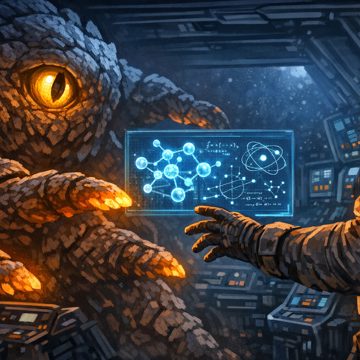
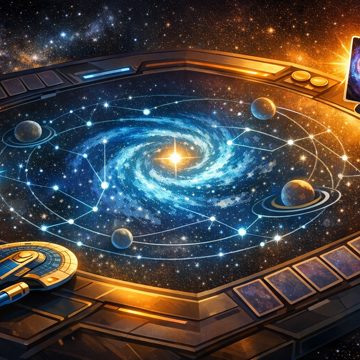
Fiction uses the same instinct more playfully. In one spacefaring story, a human visitor meets an alien captain who treats war as old news and secrecy as a joke. The aliens have names for their own ships that are intentionally confusing, and even their war stories are delivered with a kind of weary humor. Their galaxy is already old, full of ruins and prior civilizations. Humanity arrives too late to be first, only to discover that the stars have been mapped, fought over, and catalogued by others long before. That is a different kind of ancient alien story: not a conspiracy, but a cosmic disappointment. The wonder comes from realizing the universe has already had many eras, many empires, and many forgotten species.
Lovecraftian fiction pushes the idea in another direction. There, ancient alien beings are not benevolent teachers but incomprehensible presences that once shaped Earth or still lurk beneath its history. The Elder Things and other mythic entities blur the line between alien life and ancient godhood. For readers drawn to ancient alien theories, that overlap is part of the attraction. The stories imagine a world where the past is deeper, stranger, and more dangerous than human history admits.
Role-playing settings also make fertile ground for this kind of speculation. In one world, a cult claims that an alien visitor brought advanced knowledge to humanity and that what people call magic is really an older, more technical system. The cult's tools, symbols, and rituals look mystical, but the claim is that the underlying method is real, structured, and older than modern civilization. Whether the premise is meant as cosmic truth, religious myth, or elaborate delusion is left open, which is exactly why it works. It lets ancient alien ideas behave like religion, science, and conspiracy all at once.
Game worlds built around ruined technologies use the same logic. In one example, ancient systems are split into two broad traditions: living, bioengineered creations and psionic glass-based machines. The first are flesh-shaped weapons, armor, and tools grown rather than built. The second are elegant glass constructs that can beam people across space, mine ore, or act as sentries. Both are remnants of a civilization whose knowledge has mostly been lost. The result is a setting where every artifact feels like a clue and every surviving machine hints at a vanished age of mastery.
Even more straightforward science fiction returns to the same emotional center. A story about a damaged ship that can be regrown from a surviving black box, or a fleet assembled from recovered ancient technology, turns the alien past into a source of rebirth. The old machines are not just relics; they are dormant partners waiting to be awakened. The ancient alien threat becomes both menace and inheritance.
What makes all of this durable is that ancient alien stories answer a deep human itch. They make the past active. They suggest that ruins are not dead, that myths may be memory, and that the world may still be shaped by forces older than our records. They also flatter our sense of discovery. If the universe is full of hidden histories, then every new excavation, every strange signal, every broken artifact might be the beginning of a much larger story.
That is why ancient aliens survive as a theme across belief, fiction, and popular imagination. They can be a warning, a joke, a conspiracy, a theology, or a plot engine. But at the center is always the same idea: humanity may not be the first to ask the big questions, and the answer may already be waiting beneath the dust.