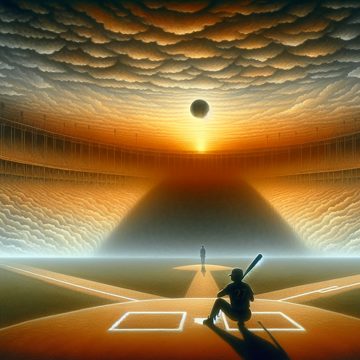
From comic-book panels to game icons and even vacuum engineering, the sphere is a recurring shape that signals motion, power, surprise, and simplicity. Its appeal crosses entertainment, technology, and everyday objects.
pop culturespheredesigncomicsgamesproduct designvisual humorvacuum cleaners

The sphere is one of the most durable shapes in modern pop culture. It appears in comic panels, game imagery, product design, and visual jokes because it is instantly readable and easy to exaggerate. A round object can suggest force, speed, danger, containment, or absurdity in a single frame. That is part of why it keeps turning up in so many different settings, from superhero art to animated gags to practical household machines.
In entertainment, the sphere often works as a shortcut for spectacle. A character launched toward a giant object, a head framed inside a circular device, or a panel built around a perfectly round visual can all create an immediate punchline. The shape is simple, but the meaning changes depending on context. In one case it can imply a cosmic threat; in another, it can make a scene feel ridiculous. That flexibility helps explain why the same visual idea can be reused across very different stories and still land.
Comic art in particular leans on the sphere for impact. Round forms are easy to center, easy to distort, and easy to repeat. A character like Wolverine, for example, can be placed into a wildly exaggerated situation simply by pairing his image with a round explosive object or a circular device. The joke does not need much explanation. The image itself does the work. The same is true for other recurring visual motifs, where a single panel becomes memorable because the shape is so clean and so extreme.
The sphere also has a special place in game culture. In many games, round objects stand in for power-ups, projectiles, collectibles, or special effects. They read quickly on screen and are easy to animate. A sphere can be a projectile, a shield, a planet, a ball, a lens, or a portal. That visual versatility makes it useful in everything from action games to role-playing games. It is also one of the few shapes that can feel both natural and artificial at once.
That dual quality matters. A sphere exists everywhere in nature - planets, fruit, eyes, bubbles, droplets - but it is also a favorite of engineers and designers because it is efficient and balanced. In product design, a sphere or sphere-like form can signal smooth motion and modernity. In household appliances, round components are often hidden inside larger systems where they help create airflow, pressure, or separation. Vacuum cleaners are a good example. The rounded cyclone chamber in a bagless vacuum is not just a style choice; it is part of how the machine works.
Vacuum design shows another side of the sphere: utility. Many users value machines that can be taken apart, cleaned, and maintained. When a vacuum clogs, the problem is often in a curved passage, a chamber, or a cyclone assembly where dust and hair collect. Designers who understand that build in access points, filters, and removable sections. That is why some products get praised for being easy to service even when they are not perfect in every other respect. The shape itself can help or hinder that experience.
Maintenance is where the sphere stops being abstract and becomes practical. A round cyclone chamber can collect debris efficiently, but it still needs cleaning. A curved brush head can improve pickup, but hair will still wrap around it. A battery pack may be tucked into a sleek form, but if the cells are not well managed, the machine will fail anyway. In that sense, the sphere is not magic. It is just a shape that can be used intelligently or badly.
That same pattern appears in consumer technology more broadly. People are often drawn to elegant, rounded designs because they look finished and premium. But the best products are not always the prettiest ones. A device that is easy to open, repair, and keep running can be far more useful than one that only looks refined. The sphere can represent both sides of that argument: polished surface on the outside, complicated engineering underneath.
In stories and memes, the sphere is also a symbol of escalation. A round object can become bigger, brighter, more dangerous, or more absurd with very little effort. That is why it works so well in parody. If a scene already feels dramatic, making the central object perfectly round can push it into comedy. If a scene is already funny, making it look monumental can make it even better. The shape amplifies whatever emotion the artist wants.
The same is true in visual shorthand. A sphere can imply a target, a zero, a planet, a ball, an egg, a head, a bubble, or a bomb. It is one of the rare forms that carries meaning before a viewer has time to think. That makes it especially powerful in fast-moving media like comics and games, where a single panel or frame has to do a lot of work. The eye recognizes the shape immediately, and the mind fills in the rest.
That may be the real reason the sphere keeps coming back. It is not just visually pleasing. It is adaptable. It can be playful, threatening, elegant, mechanical, or ridiculous. It can ground a scene in reality or push it into fantasy. It can make a product feel engineered or a joke feel bigger than life. In pop culture, that kind of range is rare.
The sphere survives because it is both basic and expressive. It is one of the simplest shapes we know, yet it can carry a surprising amount of meaning. Whether it is used in a comic panel, a game icon, a vacuum cyclone, or a visual gag, it does what good design always does: it communicates quickly, clearly, and memorably.