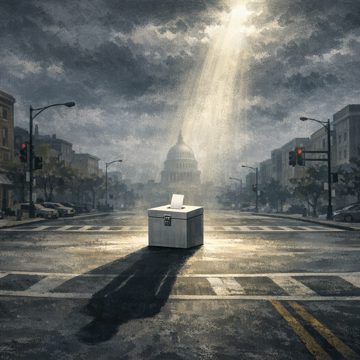
A proposed Trump ballroom project is drawing skepticism over its purpose, financing, and political value, while a legal setback has undercut claims that the space is needed for national security.
donald trumpballroom projectbrandinglegal setbacknational securitypolitical falloutconstructionskepticism

A proposed ballroom project tied to Donald Trump is drawing sharp skepticism over whether it is a serious development plan, a branding exercise, or another example of using spectacle to advance political and financial goals. The project has been described as part of a larger pattern in which Trump mixes personal image, business interests, and public power in ways that blur the line between private gain and government action.
Critics say the ballroom plan fits that pattern. They argue that Trump has long treated major announcements as leverage, with grand promises that are not always followed by execution. In this case, the central question is whether the project is actually moving forward or whether it is being used to signal strength, attract attention, and create the appearance of momentum. Some observers see it as one more instance of branding attached to power rather than a straightforward construction project.
The legal and political context around the ballroom has added to the doubts. A judge recently rejected Trump's claim that he needed a ballroom for national security purposes and openly mocked the argument. That ruling weakened the idea that the project is being driven by any urgent public need. Instead, it reinforced the view that the ballroom is a political symbol first and a practical necessity second, if at all.
The broader criticism is that Trump has repeatedly turned policy into a stage for personal benefit. His opponents argue that he has used crises, threats, and high-stakes negotiations to serve his own interests and the interests of allies and family members. In that reading, a ballroom project is not just a building plan but part of a larger style of governance in which image, pressure, and self-promotion matter more than public purpose.
That style has also fed concerns about market manipulation and insider advantage. Some critics say Trump's actions have repeatedly created conditions that benefit people close to him, especially in financial markets. They view the ballroom project through the same lens: a high-profile initiative that may help reinforce his brand, reward loyalists, or deepen his influence, even if the public value is unclear.
There is also skepticism that the project will actually happen as described. Trump and his business organization have a long history of announcing ambitious plans that later stall or never fully materialize. That history has led many to treat the ballroom announcement as an early-stage signal rather than a finished commitment. The repeated pattern of big claims followed by uncertainty has made some analysts put the odds of completion low.
Even among those who think the project could advance, there is disagreement over what it would mean. Supporters may see it as another large-scale addition to Trump's political and architectural legacy. Critics see it as an emblem of excess, ego, and the use of public-facing projects to project dominance. The name itself carries weight, since attaching Trump's brand to a major structure has become part of the political message as much as the physical design.
The ballroom debate also reflects a wider frustration with how Trump handles conflict. He is often accused of escalating tensions, threatening opponents, and then presenting the resulting pressure as strength. In that framework, the ballroom is not an isolated project but another example of a political style built around intimidation, leverage, and spectacle. For critics, the problem is not just the building itself but the larger system of incentives it represents.
Some of the harshest reactions go further, describing Trump as reckless, dishonest, and obsessed with personal survival. They argue that his public behavior shows contempt for institutions and a willingness to push events toward dangerous outcomes if he believes it helps him politically. The ballroom project, in that view, becomes a symbol of bunker mentality: a lavish structure standing in for a deeper refusal to accept limits or accountability.
At the same time, the project has become part of a broader argument about whether Trump's influence still works the way it once did. His defenders often rely on the force of his name and the size of his platform. But his critics say that his claims increasingly fail when tested against legal rulings, diplomatic realities, or practical constraints. The ballroom project is being measured against that same standard, and the result so far is skepticism rather than confidence.
For now, the project remains wrapped in uncertainty. The legal blow to Trump's national security claim has undercut one of the more dramatic justifications attached to it. The history of unfinished promises has raised doubts about whether it will proceed at all. And the larger political climate around Trump ensures that even a building proposal is read as a test of power, loyalty, and control.
What remains clear is that the ballroom is not being viewed as an ordinary construction story. It has become another flashpoint in the long-running argument over Trump's motives, his business practices, and the way he uses public attention to blur the boundary between governing and self-promotion. Whether the project moves ahead or fades away, it has already become part of the larger case against him: that the show is often bigger than the substance, and the substance is often harder to find than the spectacle.