Tesla's latest earnings report beat expectations, but the details raised fresh concerns about autonomy promises, rising capital spending, weak margins, and the gap between the company's stock price and its core auto business.
TeslaTSLAElon MuskHardware 3Full Self-DrivingFSDrobotaxiearningscapital expendituresdilutionWaymo

Tesla's latest earnings report produced a familiar split between headline strength and deeper unease. Revenue came in at $22.4 billion and non-GAAP earnings were $0.41 a share, enough to trigger an after-hours pop in the stock. But the details behind the quarter, and especially the company's comments on autonomy hardware, have revived questions about whether Tesla's long-running story is colliding with operational reality.
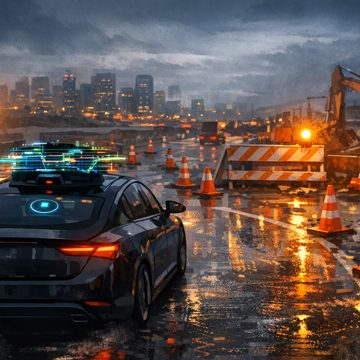
The sharpest issue is Hardware 3. Tesla said the older system on millions of vehicles does not have the capability to achieve unsupervised Full Self-Driving. That matters because roughly 4 million Tesla vehicles on the road are equipped with Hardware 3, and many owners paid $8,000 to $15,000 for FSD on the belief that their cars already had the necessary hardware. Tesla chief executive Elon Musk had repeatedly suggested over the years that the hardware was sufficient for full autonomy. The latest acknowledgment effectively ends that promise for many owners, at least on the current vehicles.
The company's proposed remedy is not a refund or a free upgrade. Instead, Tesla has floated a discounted trade-in toward a new car with Hardware 4. That leaves open the possibility of significant liability, especially because the affected group includes a large number of customers who paid upfront for a feature that remains unfinished. The issue is likely to draw legal scrutiny, with the central question being whether the company sold a capability it knew its older hardware could not deliver.
Tesla also said its current FSD software is ready for unsupervised deployment, then quickly emphasized that major architectural improvements are still coming. That combination has deepened skepticism. The practical reading is that the software still is not safe enough to use without a human watching, even if the company continues to describe it as close to deployment. Full unsupervised consumer autonomy now appears to be pushed out to late 2026 at the earliest.
The financial picture is no less complicated. Tesla's filing showed that one of the biggest drivers of operating income improvement was not a surge in demand or a breakthrough in manufacturing efficiency, but one-time benefits tied to warranty and tariffs. The company also released warranty reserves and benefited from tariff refund windfalls. At the same time, it stretched supplier payments and took on billions in new debt. Those moves helped the quarter look better than the underlying business might otherwise have appeared.
Non-GAAP reporting further softened the picture by excluding more than $1 billion in stock-based compensation. On a GAAP basis, Tesla reported net income of $477 million on $22.4 billion in revenue, a margin of just 2.1%. Against a market value of roughly $1.4 trillion, that is a very thin profit base. Annualized, the quarterly GAAP result implies a valuation that remains extremely demanding by ordinary auto-industry standards.
Capital spending is also moving higher. Tesla had previously guided to more than $20 billion in capital expenditures for 2026, but that figure has now been raised to more than $25 billion. Management also said it expects negative free cash flow for the rest of the year. That creates a difficult balance: the company is spending at a pace far above its historical annual run rate while generating only modest cash from the core business. If the spending continues and cash flow remains negative, dilution through new equity issuance becomes a real possibility.
The auto business itself shows signs of strain. Tesla delivered 358,000 vehicles in the quarter, below estimates, while production reached 408,000. That left roughly 50,000 vehicles sitting in inventory. Inventory days have climbed from 10 to 27 in just a few quarters. In California, one of Tesla's most important U.S. markets, registrations fell 24% year over year and market share slipped from 9.2% to 7.7%. Those figures point to a business that is still large, but no longer expanding with the ease investors once assumed.
The valuation case now rests heavily on robotaxis, autonomy, and Optimus robots. That is where comparisons with Waymo have become especially uncomfortable for Tesla bulls. Waymo, which is already operating commercially in multiple U.S. cities, recently raised $16 billion at a $126 billion valuation. It has completed 15 million rides in 2025 alone and logged more than 127 million autonomous miles. Even if Tesla were given full credit for matching that valuation, the implied value per Tesla share would still only be a fraction of the current stock price.
That gap has sharpened the debate over whether Tesla's shares are priced for a future that may never arrive on schedule. With about 3.75 billion shares outstanding, even generous assumptions about robotaxi value, the auto business, and energy storage still produce a sum-of-the-parts estimate far below the current market price. The numbers suggest that investors are paying for a story as much as for earnings.
There are also broader concerns around governance and incentives. Musk's compensation package remains enormous, and some investors see it as reinforcing the company's dependence on ever bigger promises. Others argue that the market has spent years accepting a valuation disconnected from the company's actual delivery record. The result is a stock that can rise on optimism even as the underlying business faces slower growth, weaker margins, and mounting capital needs.
Tesla remains one of the most influential companies in the market, but the latest quarter did little to settle the central question around it. The company still has scale, brand power, and a loyal base of buyers. It also has unresolved hardware promises, heavy spending plans, and a valuation that assumes major breakthroughs ahead. For now, the gap between what Tesla says it can do and what it has actually delivered is still large enough to matter.