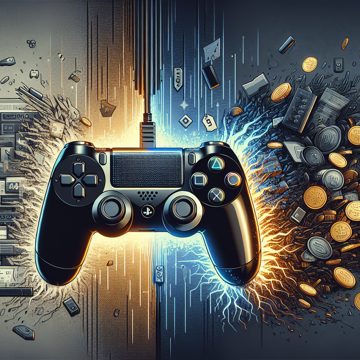
A reported 30-day check-in requirement for PlayStation digital games has revived fears about what it means to own a game, especially as players compare Sony's policies with the PS3 era of bold hardware and the industry's move toward digital control.
sonyplaystation digital games 30 daysdigital ownershipPS3PS5physical mediaconsole policy

A reported requirement that PlayStation digital games check in every 30 days has become a flashpoint for players who already worry that digital ownership is fragile. The concern is not just about one setting or one console. It is about whether a game bought on PlayStation can still feel like something a person owns, or whether access can be narrowed by account rules, internet checks, and platform policy changes.
The reaction has been especially sharp because the issue lands in a moment when many players have already accepted that modern consoles are moving away from the old idea of a shelf full of discs. Physical media once gave people a simple guarantee: if the disc was in hand, the game was theirs to keep and play, even years later. Digital purchases promised convenience, but they also introduced a new dependency on storefronts, licenses, and online verification. A 30-day check-in rule makes that dependency impossible to ignore.
For some, the policy feels like a warning sign about where the industry is headed. If a game can be locked behind periodic authentication, then the line between owning and renting becomes thinner than ever. That is especially unsettling for players who have built libraries over years and expect long-term access to single-player titles, older downloads, and games that may no longer be sold in stores. The fear is not only about a temporary outage or a bug. It is about the possibility that access can be changed after the purchase is already made.
The timing matters because Sony's brand has long been tied to both innovation and frustration. The company has a history of taking bold hardware risks, from the PS2's unusual architecture to the PS3's famously difficult Cell processor. That machine became a symbol of technical ambition that was hard to use in practice. Developers had to think in parallel, stream data carefully, and squeeze performance out of tiny local memory pools. The console could produce remarkable results when studios mastered it, but it also demanded a level of effort that many teams were not ready for.
That tension is part of why the PS3 still inspires such strong reactions. On one hand, it was a beautiful mess: a machine with a supercomputer-like processor, split memory, and a design that pushed developers to become unusually creative. On the other hand, it was expensive, awkward, and often less friendly than the competing hardware of its era. Late-generation exclusives such as Uncharted 2, The Last of Us, God of War 3, and Killzone 2 showed what the system could do when studios learned how to exploit every corner of it. The hardware was a challenge, but it also produced some of the generation's most memorable technical achievements.
That history is why the current digital ownership debate feels bigger than a single policy. Sony has already moved from the PS3's highly custom approach to the more conventional x86-64 architecture used in the PS4 and PS5. That shift made consoles easier to develop for and helped the company recover momentum. But the business side of the modern console market has become more restrictive in other ways. Digital libraries, subscription models, platform fees, and online requirements all make the user more dependent on the platform holder than ever before.
The 30-day check-in concern hits a nerve because it seems to confirm what many players have feared for years: that digital convenience can come with hidden limits. Even people who prefer digital libraries for their simplicity are uneasy when access starts to feel conditional. A game that needs to verify itself regularly is not the same as a disc that can sit on a shelf for a decade. It is tied to a service, and services can change.
That is why the debate keeps circling back to physical media. Some players argue that discs still matter, even if many modern releases require patches or extra downloads. Others say that incomplete discs and day-one updates have already weakened the case for physical ownership. Still, the appeal of a physical copy is clear: it is a form of control that does not depend on a periodic check-in. For collectors, preservation-minded players, and anyone burned by account restrictions, that difference is not abstract.
There is also a broader industry lesson here. The success of modern consoles has often depended on making the machine easy to use while hiding the complexity from developers. The PS5 is a good example of that philosophy: fast storage, low-level I/O, built-in backward compatibility, and a more straightforward development environment. The lesson Sony seemed to learn from the PS3 is that powerful hardware is not enough if the platform is too hard to support. But the digital ownership issue suggests that simplicity for developers does not automatically mean freedom for players.
The concern is not limited to one company either. Digital storefronts across the industry rely on licensing, authentication, and account management. The difference is that a major PlayStation policy change carries symbolic weight because Sony is one of the most visible gatekeepers in console gaming. When a company with that much influence tightens access, people read it as a sign of where the whole market could be going.
That is why the reaction has been so intense. A 30-day check-in may sound small on paper, but it touches a much larger anxiety about preservation, access, and consumer control. Players remember how quickly policy ideas that once seemed extreme can become normal. They also remember that the industry tends to move in one direction unless customers push back.
The PS3 era showed what happens when hardware ambition runs ahead of usability. The current digital era raises a different question: what happens when convenience runs ahead of ownership? For many PlayStation players, that is the real issue behind the 30-day check-in debate. It is not just about one game or one console. It is about whether buying digital games still means owning anything at all.