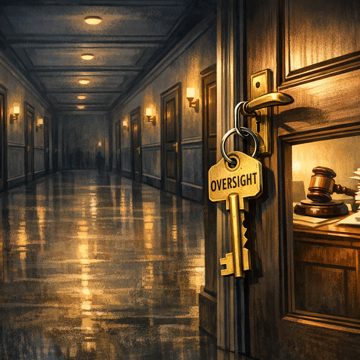
A series of Homeland Security-related controversies has put the department under pressure, from secretive detention plans and immigration pauses to questions about security clearances, free speech and political accountability.
national securityimmigrationDepartment of Homeland SecurityDHSICEcounterterrorismGAOdetentionvisa pausecongressional oversight

The Department of Homeland Security is facing a widening set of questions about transparency, security and political control. Recent disputes range from secretive detention plans and broad immigration pauses to the conduct of a senior counterterrorism official and the use of government power in politically charged cases.
One of the most immediate concerns involves plans tied to a warehouse near Hagerstown, Maryland, where local officials may have signed nondisclosure agreements with DHS over a proposed ICE detention facility that could hold 1,500 people. Critics say a secrecy agreement from elected county officials would directly conflict with their duty to keep residents informed. Meeting minutes were also removed from the county website, adding to suspicions that the project advanced before the public knew what was happening. The episode has fueled concern that major immigration enforcement plans are being negotiated behind closed doors, with little clarity about timelines, costs or oversight.
Another flashpoint is the administration's indefinite pause on immigrant visa processing for nationals of 75 countries. Senate Democrats have asked the Government Accountability Office to investigate the hold, seeking records on how many people are affected, what evidence justified the decision, whether alternatives were considered and whether the government has any real plan to restart normal processing. The request also asks whether officials concluded immigrants from those countries posed a high risk of becoming public charges and whether exceptions were considered. Families caught in the pause say the biggest problem is the absence of a clear standard or off-ramp. The hold has left applicants and relatives waiting without a transparent roadmap, even as the administration offers little public explanation.
The GAO review would not end the pause, but it could force agencies to produce documents and explain the basis for the policy. That matters because the hold affects legal immigration, not just border enforcement. It also comes at a time when confidence in Congress is collapsing, with lawmakers blamed for failing to resolve DHS funding disputes that have stretched into a prolonged partial shutdown. The shutdown has become one more symbol of a government unable to carry out basic functions while immigration policy remains in limbo.
DHS is also under scrutiny because of a senior counterterrorism official whose private online profile raised obvious security concerns. The official, a deputy assistant secretary for counterterrorism, was found to have maintained a profile on a pay-for-play dating site under a different name. The profile described its owner as working for a government agency and used the same photo as a personal social media account. It presented the user as seeking mutually beneficial relationships with a wealthy, attentive man. The account came to light after a former partner reported it to DHS.
The issue is not simply one of personal morality. The concern is that a person in a sensitive national security role could be exposed to blackmail, financial pressure or manipulation. Counterterrorism officials are expected to be especially careful about vulnerabilities that could compromise classified work or make them susceptible to coercion. A senior official advertising herself in a setting built around anonymity and money raises exactly the kind of risk security vetting is meant to detect. Even critics who say private conduct should not be policed agree that mixing a public security post with a transactional arrangement creates a serious problem.
That tension between personal conduct and public responsibility also appears in a separate immigration case involving a DACA recipient detained by ICE over social media activity. The detainee, Yaa'kub Ira Vijandre, was held after posts and likes that criticized U.S. treatment of prisoners, questioned convictions in terrorism cases and expressed support for Palestinian resistance. Attorneys argued that he was being punished for speech on matters of public concern, including opposition to Israeli military actions in Gaza and criticism of perceived due process violations. A judge later ordered his deportation.
The case highlights a broader conflict over how aggressively immigration authorities can act when speech, politics and religion intersect. It also raises the question of whether the government is targeting people for protected expression rather than conduct. When the state detains a person based on posts and likes, the line between immigration enforcement and viewpoint punishment becomes dangerously thin.
At the same time, the department sits at the center of a larger political breakdown. Congress's approval has fallen to historic lows, with public anger focusing in part on the DHS funding stalemate and the inability of lawmakers to resolve border and immigration disputes. The prolonged shutdown has deepened the sense that the system is stuck, with each side blaming the other while agencies operate under strain and major decisions are made with little public trust.
Taken together, these episodes point to a department under extraordinary pressure. DHS is responsible for border enforcement, counterterrorism, immigration processing and detention policy, yet it is now being criticized for secrecy, weak oversight and decisions that appear to expose the government to legal, ethical and security risks. Whether the issue is hidden detention plans, visa suspensions, a counterterrorism official's private profile or enforcement action tied to speech, the common thread is a lack of confidence that the department is acting with the transparency and discipline its mission requires.
The result is a growing belief that DHS is not just enforcing policy, but operating in ways that make accountability harder at every turn. That may be the most serious concern of all, because the department's power is broad and its decisions affect families, civil liberties and national security at the same time. When those decisions are made behind NDAs, vague pauses or opaque personnel standards, the public is left to wonder whether the agency is protecting the country or simply protecting itself.