
Bryce Boettcher, a linebacker from Oregon, drew mixed reviews as a potential Day 3 draft pick. Supporters praised his motor, special teams value, and baseball background, while critics questioned his athleticism and coverage upside.
coltsnfl draftBryce BoettcherOregonlinebackerspecial teamsMLB draftDay 3coverageathleticism

Bryce Boettcher became one of the more debated Day 3 names for teams looking to add linebacker help. The Oregon defender, listed as an LB and linked to the Colts in the draft chatter, drew attention for his aggressive style, special teams potential, and unusual path to football. He was also selected in the 2024 MLB draft, which only added to the sense that his career has taken a winding route.
Supporters see a player who simply makes things happen. Boettcher was described as a thumper who hits like a Mack truck, with a quick side step while blitzing that can throw off blockers. He was also praised as a student of the game with a motor that never stops. At Oregon, he was viewed by some as one of the team's best players in the Peach Bowl, and even critics of the Ducks' overall performance still saw him as a strong individual contributor. His effort level and ability to find the ball were recurring themes in the evaluation.
The appeal is obvious for a team that needs linebacker depth. Some viewed him as a fit for a defense that wants players who can play fast and physical, even if the testing numbers are not elite. Others believed he could be fast-tracked up the depth chart because of how hard he plays and how active he is on every snap. Several evaluations pointed to a floor as a long-time special teams ace, with the possibility of developing into a rotational linebacker if his game translates.
Still, the concerns were just as clear. Boettcher was repeatedly described as a poor athlete by NFL standards, and that became the biggest objection to taking him in the fourth round. Some believed he was more of a first- and second-down linebacker because he is a step slow in coverage. Others argued that the defense already lacked speed and coverage ability at linebacker and off the edge, making a slower player a questionable fit. For those critics, the issue was not whether Boettcher was a bad football player, but whether he was worth the draft capital when faster options were still on the board.
That tension made him a classic projection pick. One side saw a player who could immediately help on special teams and eventually earn defensive snaps. The other side saw a reach who might have been available later, perhaps in the sixth or seventh round. The debate was sharpened by the fact that other linebacker names were still available, including players many considered better athletes or better coverage prospects. Kyle Louis, Keionte Scott, and others were mentioned as preferred alternatives by some evaluators.
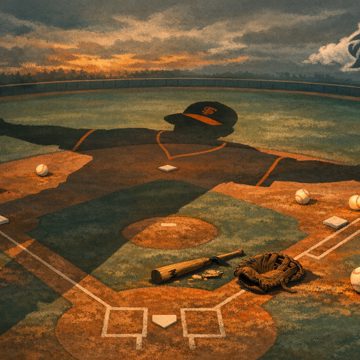
Boettcher's background also made him stand out from a normal linebacker prospect. He had turned down professional baseball money to keep chasing a national title and stayed with Oregon long enough to be part of a football-first path that ended with an NFL opportunity. That detail made his story feel unusual even by draft standards. It was framed as either a romantic football journey or a questionable financial decision, depending on how one viewed the choice. Either way, it added to the intrigue.
For the Colts specifically, the pick was tied to a larger roster need. Linebacker was widely seen as one of the weakest areas on the team, and some believed the group needed a full revamp. That made it easier to understand why a team would target a linebacker in the fourth round, even if the player was not universally loved. The argument in favor was simple: if the defense needs bodies and the player plays hard, there is room for development. The counterargument was equally simple: a team with multiple needs cannot afford to miss on athletic upside.
There was also a broader roster-building question attached to the selection. Some wanted offensive line help, interior defensive line help, or even a receiver to replace lost production. Others argued that linebacker was the clearest weakness and that the best player should be taken regardless of position. Boettcher became the symbol of that draft philosophy split. To some, he was a smart football player with a defined role. To others, he was an example of overvaluing effort at the expense of traits.
Even among those who liked him, the expectations were measured. The most common optimistic outcome was that he becomes a special teams staple and a useful depth piece. A few thought he could become more than that if the coaching staff can clean up his angles and let him play downhill. The most skeptical view was that he tops out as a backup and special teamer, with the ceiling limited by athletic testing and coverage concerns. That range of outcomes is exactly what makes Day 3 linebackers so difficult to project.
In the end, Bryce Boettcher looks like the kind of prospect teams either trust immediately or question from the start. He brings effort, toughness, and a football background that suggests he understands how to play the game. He also brings clear athletic limitations that may cap his role. For a team in need of linebacker help, that can still be enough to justify a pick. Whether it is enough to justify a fourth-round pick will depend on how quickly his instincts and motor can overcome the doubts about speed and coverage.





Comments
No comments yet — be the first to share your thoughts.