A newly discussed ocean planet has revived fascination with worlds that may be covered entirely by water, while a survival game set beneath the sea continues to shape how people think about the ocean as both wondrous and terrifying.
ocean planetexoplanetTOI-1452 bwater worldspacethalassophobiaSubnauticaice VIice VIImetallic hydrogen

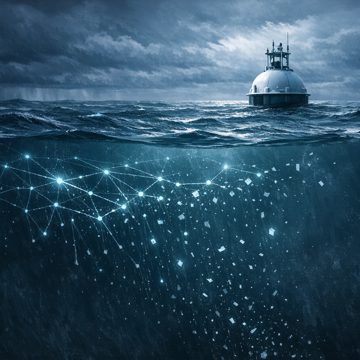
A planet bigger than Earth, covered from pole to pole by water and with no land in sight, is the sort of discovery that makes the imagination run wild. A world like TOI-1452 b invites the same mix of awe and unease that has long surrounded the idea of ocean planets: endless water, unknown depths, and the possibility of life hidden far below the surface. It is a reminder that the universe is large enough to contain worlds that feel almost impossible to picture, even before any details about their chemistry or habitability are fully understood.
That sense of scale often leads to a strange kind of melancholy. There are countless places humans will never visit, and probably countless others that no living person will ever see except through instruments. Even so, the immensity of space can also be grounding. The idea that there may be other intelligent beings somewhere else, looking up at their own skies and wondering the same things, turns loneliness into a kind of connection. If other minds exist out there, then the question of whether we are alone may already have an answer. We just may never be able to exchange it.
That is why stories about first contact, ocean worlds, and alien environments carry such emotional weight. They are not only about science; they are about perspective. Human beings are small, brief, and limited in what they can physically reach, but they are also capable of imagining the universe in astonishing detail. The telescope, the probe, and the mathematical model become ways of standing at the edge of what can be known and acknowledging how much remains beyond it.
The fascination becomes sharper when the subject is water. Ocean worlds sound inviting at first, but the more they are examined, the stranger they become. If a planet has too much water, the pressure at the bottom can produce exotic forms of ice such as ice VI and ice VII. These are not the familiar ice cubes found in a freezer. They are high-pressure solid phases that form under extreme conditions and can prevent the normal circulation of minerals through the ocean. Without that circulation, the chemical mixing that helps sustain life on Earth may never really get started. In that sense, a planet can have all the water in the universe and still be inhospitable.
The same idea appears in discussions of metallic hydrogen, another substance that sounds like it belongs in science fiction. Under immense pressure, hydrogen may become a metallic phase with extraordinary energy density. In theory, it could be useful as a fuel or in propulsion systems, but it would also be wildly unstable and difficult to contain. The appeal is obvious: huge energy in a compact form. The drawback is equally obvious: if the pressure changes, the release could be catastrophic. Science often works like that, with one hand offering possibility and the other hand warning about the cost.
That blend of wonder and danger is exactly what has made a certain underwater survival game so memorable. Set on an alien ocean planet, it turns the sea into a place of exploration, beauty, and dread. At first, the bright coral shallows and colorful creatures suggest a peaceful world. Then the water gets deeper, darker, and quieter. Distant noises become warnings. A wreck in the wrong biome becomes a place of panic. A vehicle that once felt like safety can suddenly seem fragile and disposable.
What makes the game so effective is that it captures a feeling many people recognize even outside of games: fear of the ocean as a vast, unknowable space. Some players discover that they have thalassophobia only after spending time in that world. Others already felt uneasy around deep water and find the game intensifies it. The game does not rely on cheap jump scares as much as it relies on pressure, sound, and distance. It is less about being startled than about realizing how far away safety is.
That is why it is often described less as a horror game than as a terror game. Horror tends to be about shocks, monsters, and gore. Terror is slower and more persistent. It is the feeling of hearing something in the dark water and knowing that whatever is out there is larger, faster, and less constrained than you are. It is the sinking realization that the vehicle you trusted is not enough, or that the route home is longer than you thought, or that the ocean floor is not where you assumed it was.
The game also changes over time. Early on, the player is cautious, nervous, and constantly checking the environment. Later, the same world can feel almost familiar. The creatures that once inspired panic become part of the landscape. The player learns where to go, what to avoid, and how to survive. That shift from fear to competence mirrors the way people adapt to many real dangers: the unknown becomes mapped, and the terrifying becomes manageable, though never entirely safe.
That is part of why the subject keeps circling back to the same emotional core. Whether it is a planet covered in water, an exoplanet that may never be visited, a theoretical ice layer at the bottom of an ocean, or a digital abyss full of giant predators, the appeal is not just the spectacle. It is the confrontation with scale, isolation, and possibility. The universe is full of places that may never be touched, and that fact can be sad. It can also be beautiful.
If there is a comfort in all of this, it is the recognition that humans are not separate from the wonder they seek. They are part of it. A person standing on Earth, looking at the night sky, is not outside the story of the cosmos. They are one of its temporary, thinking pieces. That may not solve the problem of distance, and it will not bring back the worlds we cannot reach. But it does make the search feel worthwhile. The unknown is still unknown. It is just no longer empty.